Few things change the feel of a room as quickly or as cheaply as a fresh set of cushions. A plain grey sofa can look crisp and tailored one week and soft and cosy the next, simply because of what is plumped along its back. Cushions add colour where paint would be a big commitment, bring pattern into a room without wallpapering a wall, and make hard chairs and window ledges far more inviting to sit on.
Yet many homes end up with a random pile that never quite looks right: covers that sag, colours that fight, or so many cushions that nobody can actually sit down. Styling them well is a skill anyone can learn. Below you will find practical advice on how many to use, which sizes and fillings to buy, how to combine colour, pattern and texture, how to arrange them on different seats, and how to refresh the look through the seasons without spending a fortune.
Table of Contents
Why Cushions Do So Much Heavy Lifting
Cushions sit at eye level when you walk into a room, so they draw attention long before a rug or a skirting board does. That makes them a natural tool for pulling a scheme together. If the curtains are blue and the rug is rust, a cushion that mixes both colours tells the eye the two belong together.
They also solve comfort problems. A deep sofa becomes usable for shorter people with a firm cushion behind the lower back. A wooden bench by the dining table feels friendlier with a couple of seat pads. A bed with a thin headboard is easier to read in with a large square propped behind you. Think of cushions as both decoration and practical support, and you will choose them more wisely.
For renters, they are especially useful. You may not be allowed to paint or change the flooring, but you can introduce your own personality through textiles that move with you to the next home.
Getting the Numbers Right
There is no single correct quantity, but scale is a reliable starting point. A compact two-seater generally looks balanced with two to four cushions. A three-seater often suits four to five, and a large corner sofa may take six or seven spread across its length. Fewer, larger cushions usually look calmer and more expensive than lots of small ones.
Odd or Even
Even numbers arranged as mirrored pairs at each end give a formal, symmetrical look that suits traditional rooms and period homes. Odd numbers, such as three or five, feel more relaxed and modern, with one cushion breaking the pattern. Neither approach is wrong; choose the one that matches the mood of the room.
Leave Space to Sit
A good test is to sit in every seat once the cushions are arranged. If you have to move a cushion to the floor before sitting comfortably, there are too many. Cushions should invite people to settle, not create a tidying job every evening.
Sizes, Inserts and Fillings
The difference between a cushion that looks plump and one that looks tired is often the insert rather than the cover. Get this part right and even inexpensive covers can look smart.
Choosing the Insert
A widely used tip is to pick an insert one size bigger than the cover, for example a 50 cm pad inside a 45 cm cover. The extra fullness fills the corners and gives that full, rounded shape you see in magazine photographs. Never use a pad smaller than the cover, as it will slump almost immediately.
Feather, Fibre or Foam
Feather and down pads feel soft, hold a satisfying dent when chopped at the top and tend to keep their loft for years with regular plumping. Hollowfibre and other synthetic fillings are lighter on the wallet, usually machine washable and a sensible choice for anyone with feather allergies, though some flatten sooner. Foam blocks are firm and keep a crisp edge, which suits seat pads, bench cushions and window seats rather than decorative scatter cushions.
Shapes Beyond the Square
Square cushions do most of the work, but rectangular lumbar cushions add structure and back support, bolsters suit daybeds and the ends of beds, and round or button-tufted styles bring a softer, more playful outline. Mixing two or three shapes adds depth without much effort.
A Quick Sizing Reference
Exact measurements vary between makers, so use these rough sizes as a starting point and always check the label before buying covers and pads separately.
| Cover Size | Suggested Pad | Where It Tends to Work Best |
|---|---|---|
| 40 x 40 cm (16 in) | About 45 x 45 cm | Armchairs, dining chairs, the front layer of a sofa arrangement |
| 45 x 45 cm (18 in) | About 50 x 50 cm | The everyday all-rounder for most two- and three-seater sofas |
| 55 to 60 cm square | About 5 cm larger | Back row on deep sofas, corner units and large beds |
| 30 x 50 cm lumbar | Matching or slightly larger | Lower-back support, the front of a bed, slim accent chairs |
| Bolster, roughly 20 x 90 cm | Fitted inner | Daybeds, sofa arms, window seats and children’s beds |
Building a Colour Story
The easiest way to choose colours is to borrow them from something already in the room. Look at a rug, a painting, a curtain fabric or even the view from the window, and pull out two or three shades. Your cushions then act as a bridge, connecting the sofa to everything around it.
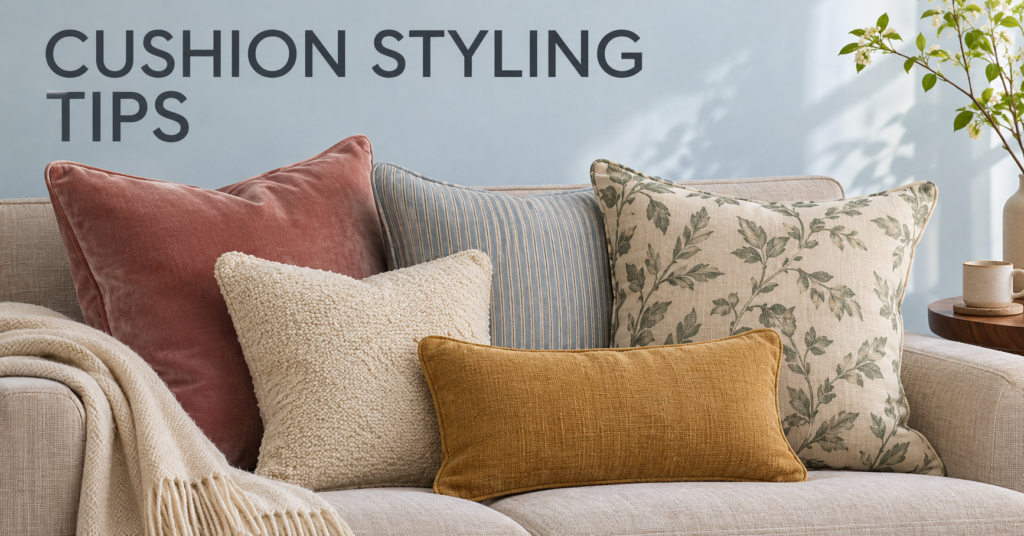
Many stylists work with a loose split: one main colour that matches or sits close to the sofa, a secondary colour that contrasts gently, and a small accent that adds a spark. On a cream sofa, that might mean oatmeal and sage, with a little mustard in a single cushion. On a dark navy sofa, try warm caramel, soft pink or ochre to stop the look feeling heavy.
Working With a Patterned Sofa
If the sofa itself is patterned, keep cushions mostly plain and choose colours taken from the pattern. One textured cushion in a solid shade will look deliberate, while three busy prints will fight with the upholstery.
Try Before You Commit
Colours shift a lot between a screen, a shop and your own living room. Before buying a full set, order fabric swatches or a single cushion and leave it on the sofa for a few days. Look at it in morning daylight, under evening lamps and on a grey afternoon. A shade that seemed perfect online can turn muddy in a north-facing room or harsh beside warm white bulbs, and finding that out with one cushion is far cheaper than with five.
Mixing Pattern and Texture Without Chaos
Pattern mixing looks effortless when it follows a simple rule of scale. Combine one large-scale print, one medium design such as a stripe or check, and one small, tight pattern or a plain weave. Keep them linked by at least one shared colour, and the mix will look curated rather than accidental.
Texture is the secret ingredient in rooms that feel warm even when the palette is quiet. Pair smooth cotton with chunky knit, linen with velvet, or bouclé with a flat-woven stripe. Neutral schemes in particular need this contrast, otherwise beige and white can look flat and unfinished.
Trims and Details
Piping, fringing, pom-pom edges and contrast borders add character but can quickly date a room if overused. One or two trimmed cushions in an arrangement is usually plenty.
Arrangements for Different Seats
The Sofa
Start with the largest cushions at the back corners, then layer smaller ones in front, working toward the middle. Leave the centre seat clearer so it remains usable. On a corner sofa, anchor the corner itself with two large squares, then space the rest out along each arm.
The Bed
Sleeping pillows go at the back, followed by a pair of large squares or Euro-sized cushions, then one or two smaller decorative pieces or a single lumbar cushion at the front. Think about the morning routine: if making the bed already feels like a chore, three cushions are kinder than seven.
Armchairs and Dining Seats
One cushion is often enough for an armchair, chosen to tie it to the sofa. Dining chairs and benches benefit from flat seat pads with ties or non-slip backing, in fabrics that can handle spills.
Window Seats and Garden Furniture
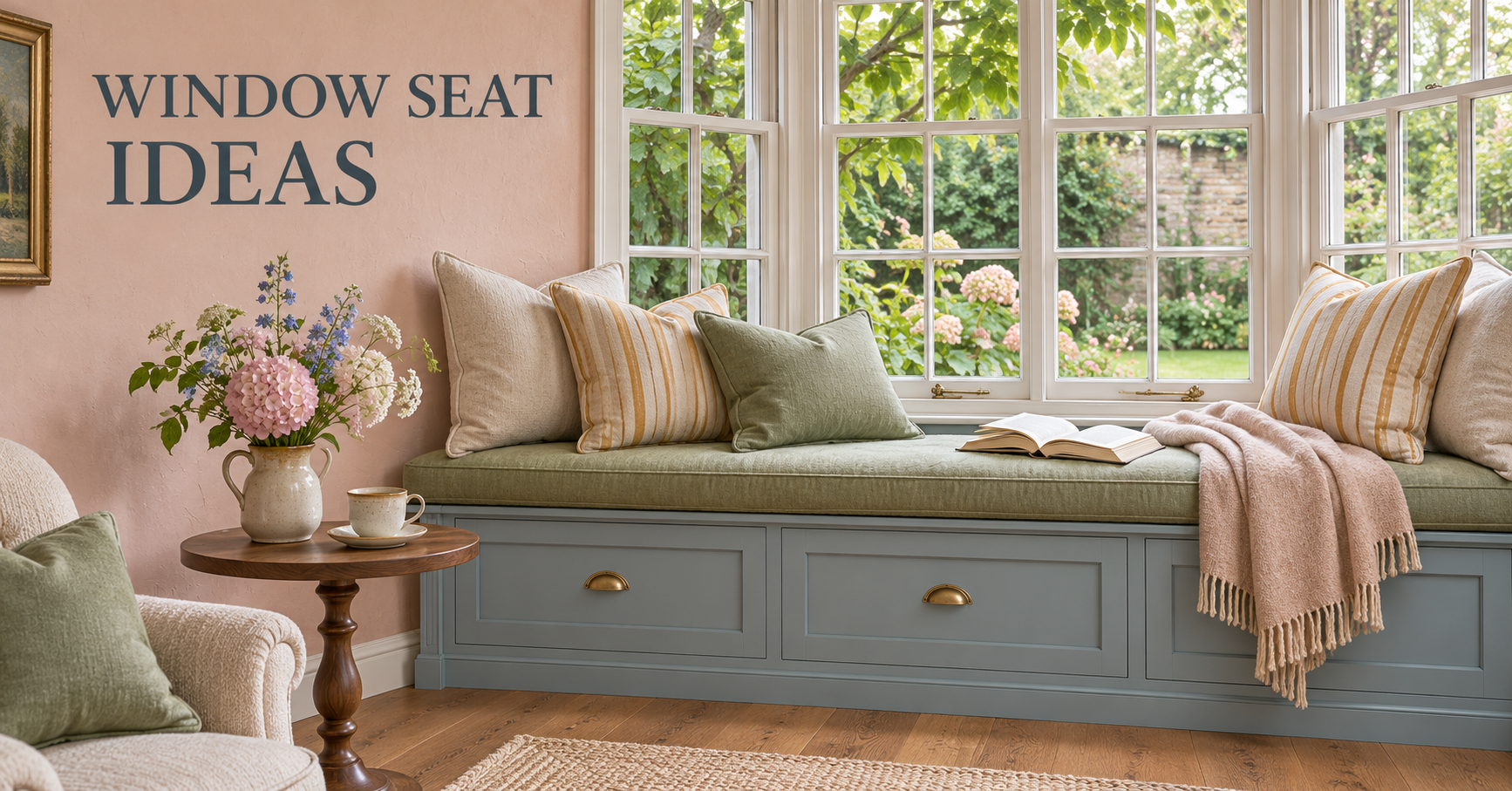
A window seat looks most built-in with a fitted foam pad, usually around 5 to 10 cm thick, finished with a few back cushions in varied sizes. For outdoor seating, choose fade-resistant, quick-drying outdoor fabrics and store cushions indoors when rain is forecast.
Seasonal Swaps and Staying Warm
Keeping a second set of covers lets you shift the mood of a room twice a year with almost no effort. In autumn and winter, bring in wool, velvet, faux fur and deeper colours such as rust, forest green and plum. In spring and summer, swap to linen, cotton and lighter tones. Store the off-season set in breathable bags to keep moths and damp away.
Soft furnishings will not replace insulation or draught-proofing, but layering cushions and throws can make a room feel noticeably cosier on cold evenings. Some households find that, combined with sensible heating controls, they are comfortable with the thermostat set a little lower. If your living room always feels chilly, though, it is worth looking at bigger energy-efficiency improvements, such as loft insulation, secondary glazing or sealing gaps around windows and doors.
Staging, Budget and Made-to-Measure Covers
If you are preparing a home to sell or let, cushions are one of the cheapest ways to make listing photographs look warm and finished. Stick to a restrained palette and plump everything just before the photographer arrives. A tidy, welcoming living room can help a property stand out online, even if it does not change the valuation on its own.
Budgets vary widely. A simple refresh using new covers on existing pads might cost roughly £30 to £100 for a sofa, while a full set of feather pads with designer-style covers can run to several hundred pounds. Made-to-measure seat pads for a window seat or bench, cut from foam and covered by an upholsterer, cost more again. For bespoke work, describe exactly what you want, ask at least three local makers for quotes, and confirm fabric, lead time and fire-safety compliance in writing before paying a deposit.
In the UK, cushions and their fillings sold for home use are covered by the furniture fire safety regulations, so look for compliance information when buying new. Be cautious with very cheap imported items sold online with no label or clear seller details.
Keeping Them Fresh
Plump cushions daily by pushing the sides together and fluffing them back out, then give feather pads a gentle chop at the top if you like that look. Remove covers and wash them according to the care label every few weeks in busy households, or spot clean between washes. Turn cushions regularly so sunlight fades both sides evenly.
Feather pads can often be refreshed in a tumble dryer on low heat with a couple of clean tennis balls, though check the care instructions first. When a pad stays flat however much you plump it, replace it; it is a small cost that instantly revives the whole arrangement.
The Finishing Plump
Great cushion styling comes down to a few habits: match the number to the seat, buy pads a size up, borrow colours from the room, mix pattern by scale, and always leave enough space to sit down. Swap covers with the seasons, care for your pads, and spend more on fillings than on fashionable covers when budget is tight. With those basics in place, a handful of well-chosen cushions can make any room look finished and feel like home.
Quick Cushion Queries
Should cushions match the curtains?
They do not need to match exactly. Linking them through one shared colour or a similar texture usually looks more relaxed and considered than using identical fabric, which can feel dated unless the room is deliberately traditional.
How often should cushion pads be replaced?
There is no fixed rule. Good feather pads may last many years, while some synthetic fillings flatten within a couple of years of daily use. Replace them when they stay limp after plumping, smell musty or have become lumpy.
Are cushions safe in a baby’s cot or crib?
No. Public-health safer sleep guidance advises keeping a baby’s sleep space clear of pillows, cushions, bumpers and soft toys, with the baby on a firm, flat mattress. Keep decorative cushions for adult seating and older children’s rooms.