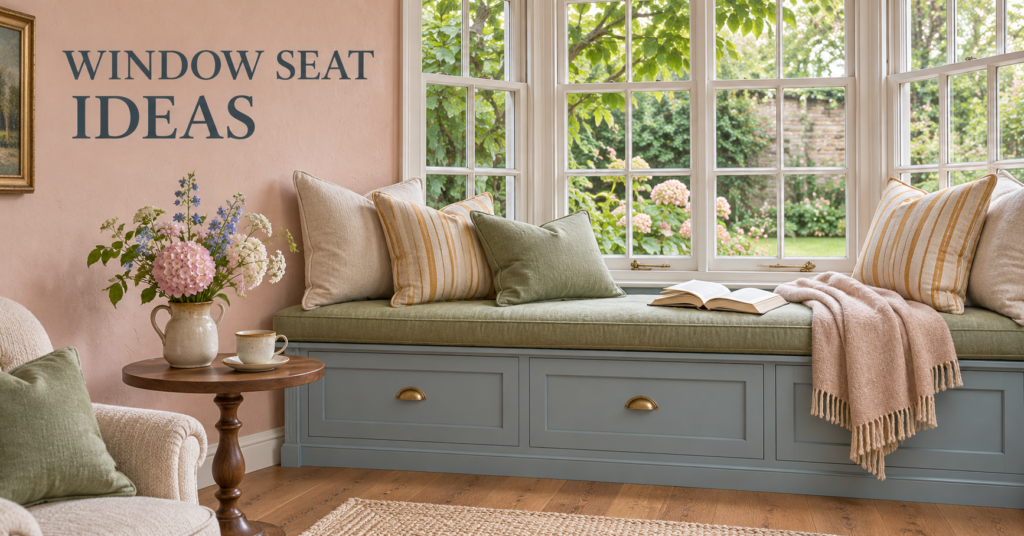
There is something irresistible about a seat tucked beneath a window. It is where children curl up with a book on a rainy afternoon, where a morning coffee tastes better with the garden in view, and where a cat will happily sleep for hours in a patch of sunshine. A window seat turns an often-wasted recess into the most loved spot in the room, and it can add storage at the same time.
The good news is that you do not need a grand bay window or a big budget to create one. A simple bench built between two alcoves, a cushioned box under a landing window or a deep sill in a dormer can all work beautifully. This guide covers where window seats make the most sense, the measurements that make them comfortable, styles and storage options, how to deal with radiators and draughts, safety for children near windows and blinds, and what you can typically expect to spend whether you build it yourself or hire a carpenter.
Table of Contents
Where a Window Seat Earns Its Place
Almost any window with a bit of floor space beneath it can host a seat, but some spots suit the idea particularly well.
Bay Windows
The classic choice. Many Victorian, Edwardian and 1930s homes have bays at the front, and a curved or three-sided bench following the shape makes a natural reading corner or extra seating for guests. Because bays often hold a radiator, plan for heating from the start.
Dormers and Loft Rooms
In attic bedrooms, the low walls under a dormer are hard to furnish. A seat built into the recess uses that awkward height perfectly and gives the room a cosy focal point.
Landings and Half-Landings
A wide landing with a window can become a small pause point, perfect for putting on shoes or reading quietly away from the busy downstairs. Keep walkways clear so the seat does not narrow the route to the stairs.
Kitchens and Dining Corners
A bench below a kitchen window, combined with a table and a couple of chairs, creates a relaxed breakfast nook that uses less floor space than freestanding dining furniture.
Children’s Bedrooms
Children love a den, and a window seat with toy storage underneath makes a bedroom feel special. Safety around windows and blind cords is especially important here, as explained later.
Getting the Proportions Comfortable
A window seat that is too high, too shallow or too narrow quickly becomes a shelf for clutter instead of a place to sit. A few measurements help you get it right.
Seat Height
Most window seats sit at a similar height to a dining chair, typically somewhere around 41 to 51 cm (about 16 to 20 inches) from the floor to the top of the cushion. Around 45 cm suits most adults. Remember to subtract the cushion thickness when building the base, because a 10 cm cushion raises the seat noticeably.
Seat Depth
For simple perching or dining, a depth of roughly 40 to 46 cm works well. For lounging, reading or curling up, deeper seats in the region of 50 to 60 cm feel far more relaxing. Many people settle on about 45 to 50 cm as a good all-rounder, then use back cushions to fine-tune comfort.
Length and Window Sill
To stretch out fully, an adult needs a seat of roughly 1.6 to 1.8 m long, although shorter benches still make lovely sitting spots. Check the height of your window sill too. If the sill sits low, you may need to design the seat around it, or keep the cushion below so it does not press against the glass.
Back Support
Sitting with your back to bare glass or a cold wall is rarely comfortable for long. Add a padded back panel, a row of large cushions or a fixed upholstered board to the side walls in an alcove so you can lean sideways with your feet up.
Window Seat Styles Compared
There are several ways to build a window seat, from fully bespoke joinery to clever adaptations of everyday furniture. The table compares common options so you can match the style to your space and budget.
| Seat Style | Typical Depth | Strengths and Trade-offs |
|---|---|---|
| Built-in joinery bench | 45 to 60 cm | Fits the space exactly and looks polished; the most expensive route, needs a skilled carpenter |
| Lift-up lid box seat | 40 to 50 cm | Hidden storage for blankets and toys; lid must be lifted to reach contents, so fit soft-close stays |
| Drawer-base seat | 45 to 55 cm | Easy access without moving cushions; more joinery work and drawer runners add cost |
| Adapted kitchen units | About 56 to 60 cm | Base units topped with a board are a budget favourite; depth can be generous for small rooms |
| Open-front bench | 40 to 50 cm | Baskets slot underneath; simple to build and lets radiator heat escape more easily |
| Freestanding bench | 35 to 45 cm | No building work and moves house with you; less snug fit and limited storage |
Whichever style you choose, measure the recess in several places, because older walls are rarely perfectly straight or square. A small scribe strip along the wall edge can hide uneven gaps.
Building Storage Into the Bench
A window seat is one of the most efficient storage spots in a home because it uses space that would otherwise sit empty.
Lift-Up Lids
A hinged top is the simplest approach and holds bulky items such as spare bedding, board games or seasonal clothes. Use soft-close lid stays so the top cannot slam on fingers, which matters in family homes.
Drawers and Cupboards
Deep drawers let you reach shoes, toys or files without removing cushions. Cupboard doors at the front work well for items you use less often. Both cost more to build but feel more practical in everyday life.
Side Shelving
Where a window sits between alcoves, built-in bookshelves on either side of the seat create a library-style nook. Painting the shelves, seat and window frame the same colour gives a calm, unified look.
Radiators, Draughts and Staying Warm
Windows are where homes lose heat, and many sit above radiators, so a window seat needs careful thought about warmth and energy use.
Working Around a Radiator
Boxing a radiator in completely traps heat and makes the room colder. If the radiator must stay under the seat, include a slatted or perforated front panel and a gap at the back of the seat so warm air can rise. Alternatively, a heating engineer can move the radiator to another wall, which usually means new pipework and some redecorating, so budget for it.
Dealing With Draughts
Older sash and casement windows often let in cold air. Draught-proofing strips, secondary glazing or replacement windows can make the seat far more comfortable and reduce heating bills. If you live in a listed building or conservation area, replacement windows may need consent, so check with your local council first.
Thermal Curtains and Blinds
Lined or thermal curtains hung outside the recess can be drawn across at night to keep warmth in the room. Blinds fitted inside the recess, above the seat, give privacy and light control without getting in the way of cushions.
Condensation and Damp
Cold glass can cause condensation that soaks into cushions and storage. Good ventilation, trickle vents and occasionally airing the seat help prevent mould. If walls feel damp, fix the cause before building.
Cushions, Fabrics and Finishing Touches
The cushion is what makes a window seat inviting, so it is worth spending a little more here.
Choose a firm, high-density foam pad, often around 7 to 10 cm thick, with a removable, washable cover. Fabrics with a tight weave, such as cotton drill, linen blends, outdoor-grade fabric or wool, cope well with sun and daily use. Pale fabrics can fade in strong sunlight, so consider a fade-resistant fabric for south-facing windows. In the UK, upholstered furniture and fillings are generally expected to meet fire-safety rules, so look for the correct labels when buying cushions or foam.
Layer scatter cushions in a mix of sizes and textures, add a throw for colder evenings, and fit a wall light or a slim reading lamp for after dark. If you need a new wall light with fresh wiring, ask a qualified electrician to carry out the work so it meets current electrical safety rules.
Keeping Little Ones Safe Near Windows
A window seat invites children to climb, so it is wise to think about safety before you build.
Blind and Curtain Cords
Looped blind cords pose a known strangulation risk for young children. Official UK product safety guidance advises keeping cots, beds and other furniture away from window blinds, securing cords with tensioners or cleats, and fixing cleats at least 1.5 m from the floor. A child standing on a window seat could reach a cleat at that height, so cordless blinds or shutters are the simplest solution above a seat.
Window Restrictors
On upper floors, fit window restrictors that limit how far a window opens while still allowing ventilation. Make sure they can be released quickly by an adult in an emergency, and keep any keys nearby.
Toughened Glass and Edges
Older windows may not use safety glass, and a child bouncing on a seat could knock against the pane. Rounded edges on the bench and soft-close lids help prevent bumps and trapped fingers.
What a Window Seat Typically Costs
Prices vary widely depending on size, materials, storage and who does the work.
DIY and Furniture Hacks
A simple open bench or a seat made from adapted base units and a board can often be built for a few hundred pounds including a cushion, especially if you already own tools. Ready-made foam pads and covers are available in standard sizes, while bespoke cushions cost more.
Bespoke Joinery
A carpenter-built seat with drawers or side shelving typically runs from several hundred pounds into the low thousands, depending on materials such as MDF, birch plywood or oak veneer, plus painting and upholstery. Bay windows with angled sections take more time and cost more.
Getting Quotes and Protecting Yourself
Request at least three written quotes, ask whether painting, cushions and radiator work are included, and check that each tradesperson holds public liability insurance. A well-made window seat can add charm when you sell, but it is rarely a major factor in value, so spend what you are comfortable with rather than chasing a return.
Ideas for Renters and Temporary Setups
If you rent, you can still enjoy the window-seat feeling without building anything permanent. A low storage bench or a sturdy blanket box placed under the window, topped with a fitted cushion, makes a simple seat you can take with you. A pair of low bookcases laid on their backs, with a pad on top, gives storage and seating together.
Always ask your landlord in writing before fixing anything to walls, and avoid blocking radiators or covering trickle vents, as this can affect heating and lead to condensation problems that may affect your deposit.
Your Own Spot in the Light
A window seat is a small project with a big payoff: it gives you a peaceful place to sit, hidden storage and a view to enjoy every day. Start with the right height and depth, solve heating and draughts early, choose a comfortable cushion, and make safety a priority if children use the room. Whether you build a bespoke bench or adapt simple furniture, you will soon wonder how the room ever managed without it.
Window Seat Queries, Settled
How deep should a window seat be for reading?
For curling up with a book, a depth of roughly 50 to 60 cm usually feels comfortable, especially with a back cushion. Shallower seats of around 40 to 46 cm suit dining nooks and occasional perching better.
Can I build a window seat over a radiator?
Yes, as long as heat can still circulate. Use a vented front and leave a gap at the back of the seat. Avoid boxing the radiator in completely, as it will waste energy and leave the room colder.
Do I need permission to build a window seat?
Usually not, because it is treated as furniture or simple joinery. However, if you live in a listed building, changes to historic panelling or shutters may need consent, and renters should always get their landlord’s written agreement first.