A well-placed mirror is one of the oldest tricks in interior design, and it still works beautifully. It can double the daylight in a gloomy hall, make a box room feel wider, add sparkle to a dining table at night and give you a last glance at your coat before you leave the house. Put the same mirror in the wrong spot, though, and it may reflect a cluttered corner, a blank wall or a harsh glare straight into your eyes.
The secret is to think about what the glass will show and how light moves around the room before reaching for the drill. In this guide you will learn how to read a room’s light, where mirrors work best in each space, the right heights and sizes, how to fix heavy glass safely, and what to know about bathrooms, electrics and budgets. The advice suits homeowners and renters alike, in compact flats and larger family houses.
Table of Contents
What a Mirror Can Do for a Room
Mirrors have three main jobs. The first is practical: checking your reflection while dressing, shaving or doing make-up. The second is to manage light, bouncing daylight and lamp light deeper into a space. The third is decorative, adding a frame, a shape and a feeling of depth to a wall in the same way a painting would.
Most good placements combine at least two of these jobs. A hallway mirror helps you check your appearance and also brightens a dark entrance. A large mirror on a living room chimney breast acts as a focal point while reflecting the window opposite. Decide which job matters most for each mirror, and the right position usually becomes obvious.
Reading the Light Before You Hang
Stand where the mirror might go and look at what lies directly across from it. Whatever sits opposite will appear in the glass every time you pass. A window with a view of trees or sky is a lovely thing to see twice. A pile of shoes, a television or a radiator is not.
Opposite or Beside a Window
A mirror facing a window reflects the outdoors and pushes more light into the room, which can transform a dim space. A mirror on a wall next to a window, set at a right angle to it, catches light sideways and spreads it across the room more gently. In rooms with strong afternoon sun, the side position can reduce glare.
North-Facing and Basement Rooms
Rooms that never get direct sun benefit most from mirrors. Combine a large mirror with pale walls and a few lamps, and the space can feel far less gloomy on grey days. Mirrors cannot create light, so they work best alongside good artificial lighting rather than instead of it.
Testing the View
Before fixing anything, ask someone to hold the mirror against the wall while you walk around the room, sit on the sofa and stand in the doorway. Check what each angle reflects. It takes a few minutes and avoids filling holes later.
Room-by-Room Placement Guide
Use these suggestions as a starting point. Every home is different, so trust what you see during the testing step above more than any fixed rule.
| Room | Popular Spot | Points to Keep in Mind |
|---|---|---|
| Hallway | Above a console | Keep it out of the way of opening doors; a slim profile suits narrow halls |
| Living room | Chimney breast | Check heat from an open fire or stove; reflect a window rather than the television |
| Dining room | Wall facing the table | Catches candlelight and pendant light; hang low enough to work for seated diners |
| Bedroom | Wardrobe wall | A full-length mirror suits dressing; some people prefer not to see themselves from bed |
| Bathroom | Above the basin | Choose moisture-resistant backing; lit mirrors must suit the bathroom zone |
| Small room or flat | Longest wall | A large single mirror makes the space read wider than several small ones |
Entrances and Hallways
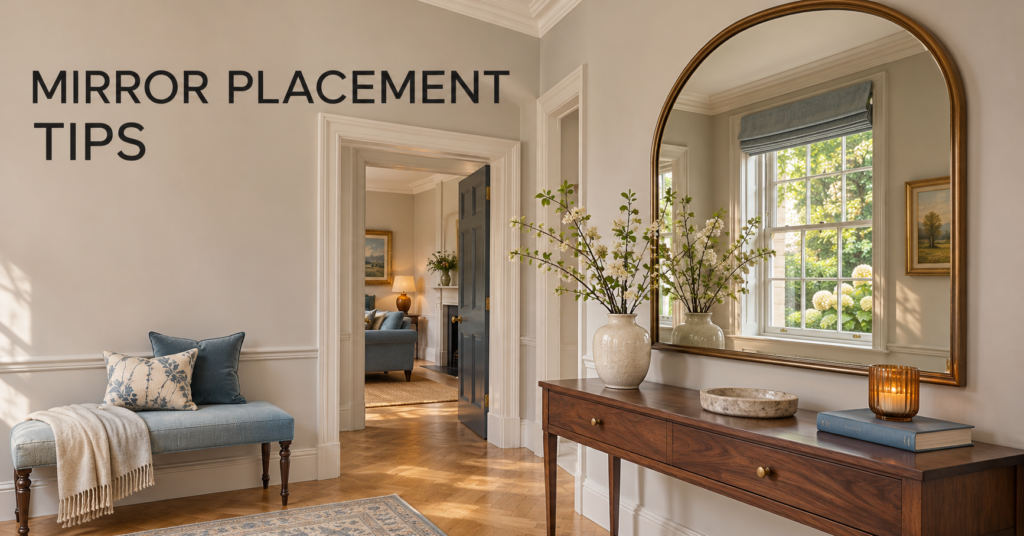
The hall is often the darkest, narrowest part of a home, and a mirror is close to essential there. A mirror above a narrow console or shelf gives you somewhere to drop keys, check your hair and greet guests with a brighter first impression. In very slim corridors, a tall mirror mounted flat to the wall works better than a deep piece of furniture that people bump into.
Avoid hanging a mirror directly facing the front door if the reflection simply shows the outside of the door itself. A spot on a side wall, catching light from a fanlight or window, usually looks better. On the landing, a mirror at the top of the stairs can brighten the turn, but keep it securely fixed and clear of where people swing round the newel post.
Living and Dining Spaces
The chimney breast is the classic home for a large mirror, and it earns its place. A mirror leaned or fixed on the mantelpiece gives the room a focal point and reflects the room back on itself, adding depth. If you use the fire or stove regularly, leave a good gap above the mantel and check the frame material can cope with warmth.
Over a sofa, a mirror can replace art, especially in rooms that need extra light. Keep roughly 15 to 20 cm between the top of the sofa and the bottom of the frame, so it does not catch heads, and aim for a width that covers a good portion of the sofa without spilling beyond it. In dining rooms, a mirror facing the table reflects candles and pendant lights in the evening, creating a warm glow. Many people hang dining mirrors a little lower than usual so seated guests can see the effect.
Bedrooms and Dressing Areas
A full-length mirror is the most useful piece in a bedroom. Mount one on the inside of a wardrobe door to save wall space, or lean a tall floor mirror in a corner where daylight falls on it, so you see colours accurately when dressing. Mirrored wardrobe doors can make a small bedroom feel larger, though they need regular cleaning to look their best.
Some people sleep better when they cannot see their own reflection from bed, particularly if streetlight or a passing car flashes across the glass at night. If that bothers you, position mirrors on a side wall rather than directly opposite the bed. A dressing table mirror should sit where natural light falls on your face from the front, not behind you.
Bathrooms: Steam, Zones and Electrics
Bathroom mirrors face constant moisture, so choose ones made for the job. Look for moisture-resistant backing, sealed edges and frames that will not warp, such as aluminium, stainless steel or treated timber. Cheaper decorative mirrors can develop black spots around the edges as the silvering corrodes in humid air.
Illuminated and demisting mirrors are popular, but they bring electricity close to water. UK wiring rules divide bathrooms into zones. Zone 1 covers the space directly above the bath or shower, and Zone 2 extends roughly 60 cm beyond it, including the area around many basins. Fittings in these zones generally need a minimum ingress protection rating of IP44, and some installers prefer a higher rating for extra peace of mind. Check the rating printed on any mirror before buying.
Wiring a lit mirror into a bathroom is not a job for guesswork. In England, much electrical work in rooms with a bath or shower is notifiable under Part P of the Building Regulations, so use a registered electrician who can certify the work. Poorly installed or non-compliant work can affect your home insurance and cause problems when you sell. Get three quotes, ask whether the price includes certification, and keep the paperwork safe.
Sizing, Shape and Proportion
For a mirror hung on its own, a centre point of around 150 cm (59 in) from the floor matches the average eye level and lines up neatly with any artwork nearby. Full-length and floor mirrors are the exception and should simply be tall enough to show your whole outfit.
Scale matters more than people expect. A mirror that is too small looks like an afterthought, especially on a large wall. Over a console, sideboard or basin, a mirror slightly narrower than the furniture below it tends to look balanced. Round mirrors soften rooms full of straight lines and boxy furniture. Rectangular and arched mirrors suit period fireplaces and narrow halls, and an arched shape can even suggest a window on a windowless wall.
Mirrors in a Group
A cluster of small mirrors with different frames can look charming on a bedroom or stair wall. Keep the gaps between them consistent, at least 5 cm or so, and remember that many little reflections can feel busy, so this approach suits plain, calm spaces best.
Fixing Heavy Glass Securely
Large mirrors are heavier than they look, and a falling one can cause real injury. Weigh the mirror on bathroom scales before choosing fixings, then pick hooks, screws and plugs rated well above that weight for your wall type. Brick and block walls hold weight well with the correct plugs. Hollow plasterboard needs heavy-duty cavity fixings or, better still, screws driven into a timber stud.
Use a detector to check for pipes and cables before drilling, and ask a second person to help lift and hold the mirror. Two fixing points, such as two D-rings or a pair of strap hangers, keep a mirror straighter and more secure than a single wire over one nail. Mirror clips or a wooden batten system can spread the load for very large frameless pieces.
Leaning Floor Mirrors
A tall mirror leaning against the wall looks relaxed, but it can slide or topple if bumped. In homes with children or pets, secure it to the wall with an anti-tip strap or bracket. Safety-backed mirrors, which have a film that holds broken glass together, add another layer of protection in busy family homes and children’s rooms.
Options for Renters
If your tenancy limits drilling, ask the landlord in writing before making holes. Otherwise, consider floor mirrors with a discreet strap, over-door mirrors that hook onto a door, or lightweight acrylic mirrors that can be hung with strong adhesive strips designed for the weight.
Mirrors and Property Appeal
When you are preparing to sell or let a home, mirrors are an inexpensive way to make rooms look brighter and larger in listing photos. Make sure the glass is spotless and check what each mirror reflects from the photographer’s viewpoint, so the camera does not appear in shot. In small flats, a large mirror on the longest wall can help buyers picture the space as more generous.
Costs range widely. Simple framed mirrors are among the cheaper ways to refresh a room, while large bespoke pieces, antique gilt frames and lit bathroom mirrors with installation can run to hundreds of pounds or more. Set a budget that includes fixings and any electrician’s fees, and spend more on the mirror that does the most work, usually in the hall or living room.
Reflections Worth Keeping
Placing a mirror well is about seeing the room from the glass’s point of view. Check what will be reflected, use daylight wisely, hang at a comfortable eye level and choose a size that suits the wall and furniture. Treat bathrooms with extra care, use proper fixings for heavy glass and bring in a registered electrician for anything wired. Get those basics right, and a single mirror can make your home feel lighter, larger and more welcoming every day.
Mirror Matters
Can a mirror really make a small room look bigger?
Yes, to a degree. A large mirror reflects light and repeats part of the room, which tricks the eye into reading more depth. The effect is strongest when the mirror faces a window or an open, uncluttered view rather than a busy wall.
Is it safe to put a mirror opposite a sunny window?
Generally, yes, for ordinary flat mirrors. The main issue is glare, which can be dazzling at certain times of day. If the reflection becomes uncomfortable, move the mirror to a wall at a right angle to the window or use sheer curtains to soften the light.
What height should a bathroom mirror be?
There is no fixed rule, but many people hang it so the centre sits near the eye level of the main users, with the bottom edge a little above the basin taps and splashback. In shared bathrooms, a taller mirror helps people of different heights.