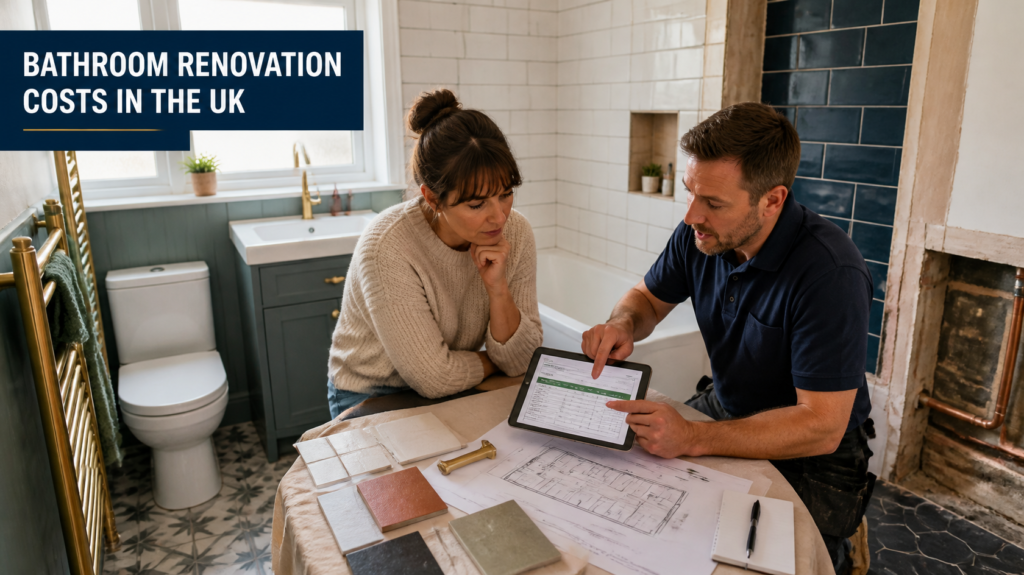
A new bathroom is one of the most popular home improvements in the UK, and one of the trickiest to budget for. Prices vary widely depending on the size of the room, the quality of the fittings, whether you move plumbing, how much tiling you need and where you live. A simple refresh might cost a couple of thousand pounds, while a luxury wet room or large master en suite can run well into five figures.
This guide breaks down bathroom renovation costs in the UK: average prices, cost by type of bathroom, labour rates for each trade, material and fixture costs, wet rooms and en suites, regional differences, hidden costs, building regulations, VAT, grants, insurance, financing and practical ways to save money.
Table of Contents
How Much Does a Bathroom Renovation Cost in the UK?
Average Costs
Different cost guides give different averages because they define “renovation” differently. Here is a snapshot:
| Source | Reported Average |
|---|---|
| Checkatrade | The UK average bathroom remodel costs around £4,500 |
| MyJobQuote | The average new bathroom costs around £7,000 to install in the UK. |
| Bathroom Mountain | The cost of a new bathroom in the UK ranges from £4,500 to £11,000. Materials cost £2,000–£6,000. Labour costs £1,800–£4,000. |
| Drench | between £5,000 and £8,000 for a complete bathroom renovation, including labour. |
Several independent sources point to around £7,000 as a typical figure. One builder notes that the UK average for a standard bathroom renovation in 2026 sits at approximately £7,000. That figure comes from multiple independent sources including Checkatrade, Victorian Plumbing and the 2024 Houzz UK Bathroom Trends Study, which recorded a median primary bathroom spend of £7,000, up 33 percent from £5,250 the previous year.
The Full Range
Costs can range enormously. The cost of a new bathroom in the UK can vary a lot – from as little as £3,000 to as much as £15,000. At the extremes, a basic update can be cheaper and a high-end project more expensive. Checkatrade notes A basic bathroom remodel can cost as little as £1,500, while A high end, complex bathroom renovation that takes more than 10 days could cost as much as £14,000+.
Bathroom Costs by Renovation Level
| Renovation Level | Typical Total Cost | What’s Included |
|---|---|---|
| Cosmetic refresh | £1,500–£3,000 | Paint, new taps, accessories, possibly new flooring |
| Budget refit | £2,500–£4,500 | Budget suite, basic tiling, same layout |
| Standard / mid-range | £5,000–£9,000 | New suite, possible layout change, full tiling |
| Premium | £10,000–£20,000+ | Custom design, luxury materials, complex plumbing |
The cosmetic refresh is described as a cosmetic update without moving any plumbing. Includes new paint, replacing taps, updating accessories, and possibly new flooring, typically costing Average Cost: £1,500–£3,000.
A mid-range renovation usually means a new suite with a layout change, full floor-to-ceiling tiling, new bathroom furniture, and an electric shower or thermostatic bar costing Total cost: £5,000 to £9,000.
At the premium level, A premium bathroom renovation costs £10,000 to £20,000 or more. This tier includes custom design, luxury materials, and complex plumbing or structural work.
Costs by Room Type
| Room Type | Typical Cost |
|---|---|
| Cloakroom / downstairs WC | £1,500–£3,000 |
| Small en suite (toilet and basin) | £2,500–£6,000 |
| En suite with shower | £4,000–£10,000 |
| Family bathroom | £5,000–£10,000 |
| Large en suite / master bathroom | £12,000+ |
| Wet room | £4,000–£18,000 depending on spec |
Bathroom Mountain’s size guide: A cloakroom costs £1,500–£3,000. A family bathroom ranges from £5,000–£10,000. A large en suite can reach £12,000+.
Checkatrade’s en suite figures:
- Small ensuite (toilet and basin): £2,500–£6,000
- Ensuite with shower: £4,000–£10,000
- Ensuite wet room: £5,000–£10,000
Labour vs Materials
Labour is a large part of bathroom costs because several trades work in a small space. Labour (plumber, tiler, electrician) 45–60% of a typical renovation, with sanitaryware (suite, shower, basin) 15–20% and tiles and flooring 10–15%.
Why Labour Is So High
Even small bathrooms need the full process. A shower room fitting in a 3 square metre en-suite still requires first-fix plumbing, electrical work, waterproofing, tiling and a second-fix installation, the same sequence as a room twice the size.
Trades also have to work in sequence. Each trade has its own day rate, and in a small space, they can’t always work simultaneously, meaning that coordination time adds up.
Trade Day Rates in the UK
Day rates vary by region and experience. These are typical ranges from 2026 cost guides:
| Trade | Typical Day Rate |
|---|---|
| Bathroom fitter | £180–£350 (higher in London) |
| Plumber | £200–£450 |
| Tiler | £150–£350 |
| Electrician (Part P) | £180–£380 |
| Plasterer | £150–£300 |
| General builder | £180–£280 |
Bathroom Mountain reports that bathroom fitters in the UK charge between £180 and £350 per day depending on region, qualifications, and job complexity. The national average daily rate is £245. Screwfix gives higher figures: depending on the region, you can expect to pay between £325 and £450 per day for a plumber and £200–£350 per day for a tiler.
Manchester vs London Example
| Trade | Manchester Rate | London Rate | Days |
|---|---|---|---|
| Bathroom fitter | £200–£300 | £300–£500 | 5–10 |
| Plumber | £200–£300 | £300–£400 | 2–3 |
| Electrician | £180–£280 | £300–£350 | 1–2 |
| Tiler | £150–£250 | £250–£350 | 3–5 |
| Plasterer | £150–£220 | £250–£300 | 1–2 |
Timescales
Fitting a new bathroom typically takes between 6 and 8 days to complete. Premium bathrooms take longer, with labour: 10–14 working days+, multi-specialist team, premium rates.
Regional Cost Differences
| Region | Standard Renovation Cost |
|---|---|
| London | £7,500–£12,000 |
| South East | £6,500–£10,000 |
| South West | £5,500–£9,000 |
London is consistently more expensive. Bathroom Mountain notes that Greater London charging 15–25% more than the UK average due to higher day rates (£300–£350).
Cost Breakdown by Element
| Element | Typical Cost (Supply) | Notes |
|---|---|---|
| Toilet | £100–£800 | Wall-hung and concealed cisterns cost more |
| Basin and vanity unit | £150–£1,500 | Depends on size and materials |
| Standard acrylic bath | £150–£500 | Cast iron and stone resin cost more |
| Freestanding bath | £500–£3,000+ | Needs strong floors and space |
| Shower enclosure and tray | £300–£1,500 | Walk-in screens vary widely |
| Shower (electric/mixer/digital) | £150–£1,500+ | Digital and rainfall showers cost more |
| Taps | £50–£500+ | Thermostatic and designer taps cost more |
| Heated towel rail | £100–£600 | Electric or plumbed |
| Tiles (per m²) | £20–£100+ | Porcelain, natural stone and zellige cost more |
| Extractor fan | £50–£300 | Required for ventilation |
| Lighting | £50–£500 | Must be rated for bathrooms |
| Flooring | £20–£80 per m² | Tiles, LVT or vinyl |
Installation Examples
- Bath installation: Installing a bath in the UK costs £300–£600 in labour for a like-for-like replacement, rising to £400–£800 in London and the South East.
- Standard bath supply and fit: Bath (standard acrylic): £200–£500 supplied and fitted.
- Tiling by area: Tiler day rate: £180–£320, or £40–£70/m² for tiling priced by area.
Wet Room Costs
Wet rooms are popular for accessibility, style and small spaces, but they cost more because of waterproofing and drainage work.
| Wet Room Type | Typical Cost |
|---|---|
| Wet room conversion (standard) | £4,000–£10,000 |
| Full wet room (supply and fit, higher spec) | £8,000–£18,000 |
| Fully accessible wet room | £8,000–£14,000+ |
Waterproofing is critical. One trade guide warns: A failed wet room waterproofing system can cause structural damage that costs ten times the original installation to repair.
Wet rooms take longer than standard bathrooms. Most installations taking between 7 and 12 working days.
En Suite Costs
What Affects En Suite Prices?
Location matters more than size. A small 3m² en suite with difficult drainage can cost more than a 6m² space located next to an existing bathroom.
If your new en suite backs onto an existing bathroom, costs drop significantly. Running plumbing through multiple floors or across joists increases labour and disruption.
Factors That Affect Bathroom Renovation Costs
| Factor | Impact on Cost |
|---|---|
| Room size | More tiles, materials and labour |
| Layout changes | Moving toilets, baths or showers adds plumbing and drainage costs |
| Quality of fittings | Designer suites cost far more than budget ranges |
| Tiling extent | Floor-to-ceiling tiling costs more than splashbacks only |
| Tile type and size | Large-format, stone and intricate patterns take longer to fit |
| Underfloor heating | Adds materials and labour |
| Wet room or walk-in shower | Waterproofing and drainage add cost |
| Concealed cisterns and hidden pipework | Extra time and materials |
| Electrical work | Lighting, fans and shaver sockets need certified electricians |
| Structural issues | Rotten floors, damp or uneven walls add cost |
| Location | London and the South East cost more |
| Access | Upper floors, narrow stairs and parking restrictions add time |
High-end features increase costs quickly. High end finishes such as large format tiles, concealed cisterns and digital showers add cost quickly, both in materials and labour.
Hidden and Extra Costs
Budget for these often-forgotten items:
- Strip-out and disposal: removing the old suite, tiles and debris, plus skip hire
- Plastering and making good: after removing old tiles
- Subfloor repairs: replacing rotten floorboards or levelling floors
- New pipework: upgrading old or lead pipes
- Boiler or water pressure upgrades: some showers need higher pressure
- Electrical certification: for notifiable electrical work
- Decorating: painting ceilings and walls
- Accessories: mirrors, cabinets, toilet roll holders, towel hooks
- Contingency: 10–20% for surprises
Stripping out alone can take a day. Stripping out the old bathroom. One day’s plumbing labour to disconnect and remove WC, basin, bath and existing shower. Typical day rate £200–£400. Disposal of the old suite is additional — either skip hire or multiple van runs.
Building Regulations and Compliance
En suite installations must comply with UK Building Regulations. The same applies to most bathroom renovations involving electrics, drainage or ventilation.
| Area | Requirement |
|---|---|
| Electrics | Bathroom electrical work must follow wiring regulations and zone rules; notifiable work in England and Wales must comply with Part P |
| Ventilation | Bathrooms need adequate mechanical extraction or ventilation |
| Drainage | New drainage must meet Building Regulations |
| Structural work | Moving walls or adding heavy baths may need structural checks |
| Water efficiency | New installations should meet water efficiency standards |
| Gas | Any gas work (e.g. boilers) must be done by Gas Safe registered engineers |
Use certified electricians. All electrical work must comply with NICEIC guidance or equivalent certification schemes.
Flats: check your lease, because you may need freeholder or management company permission, especially when moving plumbing or changing flooring.
Listed buildings: bathroom changes can affect historic fabric, so check whether Listed Building Consent is needed.
VAT on Bathroom Renovations
- Most bathroom work is charged at the standard VAT rate (20%) if your contractor is VAT registered
- Smaller sole traders below the VAT threshold may not charge VAT
- Some accessible bathroom adaptations for disabled people may qualify for VAT relief. Specialist installers note 0% VAT if you qualify.
- Renovating homes that have been empty for two years or more may qualify for a reduced VAT rate
Check current HMRC guidance or ask an accountant for project-specific advice.
Grants and Financial Help
- Disabled Facilities Grant: local councils may help fund adaptations such as level-access showers for eligible disabled people
- Local council home improvement assistance: some councils offer loans or grants for essential repairs
- Charitable support: some charities help older or disabled people with adaptations
Contact your local council to check eligibility.
DIY vs Professional Installation
| Factor | DIY | Professional |
|---|---|---|
| Cost | Saves on labour | Higher upfront cost |
| Time | Usually slower | Faster, coordinated |
| Quality | Depends on skill | Usually better finish |
| Risk | Leaks, poor waterproofing | Lower risk; warranties |
| Compliance | Electrics and some plumbing need professionals | Certificates provided |
DIY can save money: DIY saves 50–60% on total installation costs. However, electrics, gas and waterproofing should be left to qualified professionals.
How to Save Money on a Bathroom Renovation
- Keep the same layout: moving toilets and showers is costly
- Tile selectively: tile wet areas only and paint other walls with bathroom paint
- Choose standard-sized fittings: custom sizes cost more
- Use large-format porcelain wisely: fewer grout lines, but higher labour; balance cost and look
- Buy fittings in sales: suites and taps are often heavily discounted
- Reuse what works: keep a good bath or radiator
- Do some prep yourself: strip-out (carefully) or decorating
- Get at least three quotes: prices vary significantly
- Book off-peak: winter can be quieter for some trades
- Use one bathroom company: may reduce coordination problems
Getting multiple quotes is key. Obtain at least three trade quotes before committing to a plumber or tiler to ensure you’re paying a fair market rate.
Choosing a Bathroom Fitter
What to Check
- Reviews and photos of past work
- Trade memberships and certification (e.g. Gas Safe, NICEIC)
- Insurance (public liability)
- A detailed written quote listing all work, materials and exclusions
- Guarantees on workmanship
- A clear payment schedule
- Who supplies materials and waterproofing products
Confirm material responsibilities. On a day rate, confirm in writing whether waterproofing materials are supplied by you or the client.
Project Management Options
| Option | Pros | Cons |
|---|---|---|
| One bathroom company | Single point of contact | May cost more |
| Separate trades you coordinate | Can save money | More work and risk |
| Builder managing trades | Good for larger projects | Builder’s margin added |
One fitter explains the appeal of single-company management: A fully managed renovation from a single bathroom fitting company means one point of contact coordinating every trade.
Paying for a New Bathroom
Financing Options
- Savings: cheapest overall
- Retailer finance: some bathroom suppliers offer interest-free credit; read the terms
- Personal loans: for mid-range projects
- Remortgaging or further advance: for whole-house renovations
- Credit cards: useful for purchase protection on deposits
Payment Protection
- Avoid paying the full amount upfront
- Pay in stages tied to completed work
- Paying by credit card can give Section 75 protection on eligible purchases
- Keep receipts, contracts and certificates
Home Insurance and Bathrooms
Before Renovating
- Tell your home insurer about major works
- Check that your fitter has public liability insurance
- Ask whether your policy covers accidental damage during renovations
After Renovating
- Update your buildings insurance if the work adds significant value
- Keep certificates for electrical and plumbing work
- Escape-of-water claims are common, so good workmanship and waterproofing reduce your risk
Does a New Bathroom Add Value?
- A modern, well-designed bathroom improves sale appeal
- Adding an extra bathroom or en suite can be especially valuable in larger homes
- Neutral, timeless designs appeal to more buyers
- Very personal or luxury features may not return their full cost
Bathroom Renovation Checklist
- Set your budget, including a 10–20% contingency
- Decide on a refresh, refit or full renovation
- Plan the layout (keep plumbing where possible)
- Choose suite, tiles, flooring and lighting
- Check Building Regulations, lease terms and listed status
- Get at least three detailed quotes
- Check fitters’ reviews, insurance and certifications
- Agree a written contract and payment schedule
- Plan for life without a bathroom during works
- Collect certificates and warranties at the end
Common Mistakes to Avoid
| Mistake | Better Approach |
|---|---|
| No contingency budget | Add 10–20% |
| Moving plumbing unnecessarily | Keep the existing layout where possible |
| Poor ventilation | Fit an effective extractor fan |
| Cheap waterproofing | Use proper tanking systems |
| Choosing tiles without considering labour | Intricate tiles take longer to fit |
| Ignoring water pressure | Check before buying a power or rainfall shower |
| Paying everything upfront | Use staged payments |
| Skipping electrical certificates | Use registered electricians |
Final Thoughts
Bathroom renovation costs in the UK vary widely, from around £1,500 for a cosmetic refresh to £20,000 or more for luxury bathrooms and wet rooms. Many cost guides put a typical full bathroom renovation at around £7,000. Labour often makes up 45–60% of the total because plumbers, tilers, electricians and plasterers all need to work in sequence in a small space, and London prices are typically 15–25% higher. Keep costs under control by keeping the existing layout, choosing fittings wisely, tiling selectively, getting several quotes and keeping a contingency. Make sure all electrical, drainage and ventilation work meets Building Regulations, and protect yourself with written contracts, staged payments and proper certificates.
Frequently Asked Questions
1. How much does a new bathroom cost in the UK?
Most full bathroom renovations cost around £4,500–£11,000, with many guides citing about £7,000 on average.
2. How long does a bathroom renovation take?
A standard bathroom usually takes 6–8 days, while premium bathrooms and wet rooms can take 10–14 days or more.
3. How much do bathroom fitters charge per day?
Bathroom fitters typically charge £180–£350 per day, and more in London.