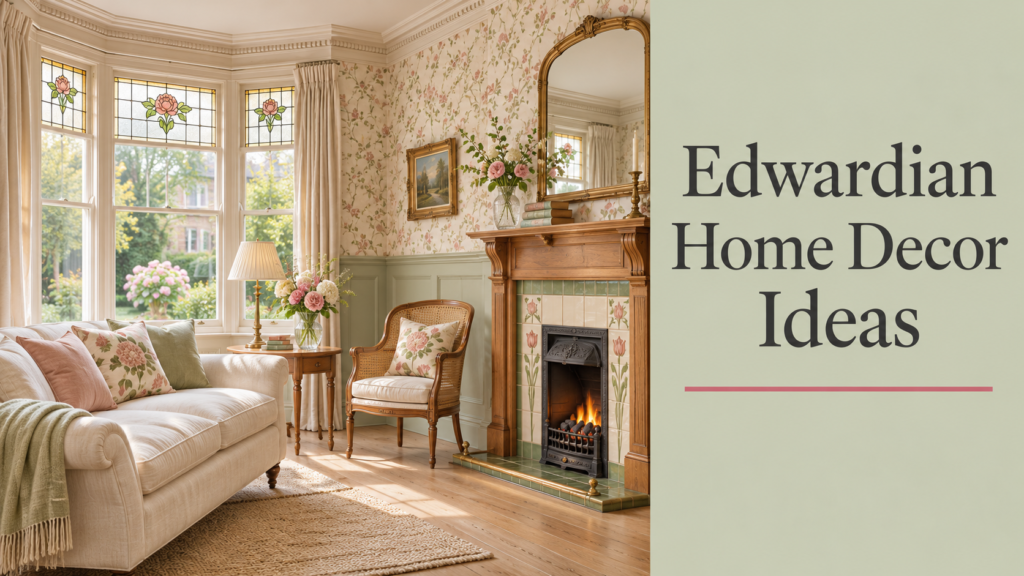
Edwardian homes are some of the most practical and pleasant period properties in Britain. Built mainly in the early 1900s, they kept much of the craftsmanship and character of Victorian homes but added more light, more space and a fresher, less cluttered style. Wide hallways, generous bay windows, decorative porches, stained glass, picture rails, parquet floors and tiled fireplaces make Edwardian semis, terraces and villas especially popular with today’s buyers.
This guide shares Edwardian home decor ideas for every room. It covers the history and influences of Edwardian style, key features, colour palettes, wallpaper and patterns, flooring, lighting, furniture, room-by-room ideas, modernising sensitively, Edwardian style in newer homes, budget tips and common mistakes.
Table of Contents
A Brief History of Edwardian Style
Edwardian homes are associated with the reign of King Edward VII in the United Kingdom, who succeeded to the throne after the death of his mother, Queen Victoria, and were predominantly constructed between 1901 and 1914. Strictly, the Edwardian period ran from 1901 to 1910, although this is sometimes extended to 1914 — either way, its was fairly short when compared to other architectural periods and house styles.
A Lighter Approach Than the Victorians
Unlike the Victorian period that preceded it, the Edwardian years saw a far more pared-back approach being taken to house design, as well as in the interior schemes that were favoured — something that was heavily influenced by the Arts and Crafts movement.
The guiding ideas were light and fresh air. The underlying themes of buildings and interior design of the Edwardian era were for expensive simplicity and sunshine and air. Colours and detailing were lighter than in the late 19th century, looking back to the Georgian era of a century before.
Key Influences
| Influence | What It Brought |
|---|---|
| Arts and Crafts | Handcraft, natural materials, simple forms, porches |
| Art Nouveau | Flowing curves, floral motifs, stained glass |
| Georgian revival | Symmetry, sash window styles, classical details |
| Tudor revival | Mock-Tudor beams and timbering on larger homes |
| Garden City movement | Spacious suburban homes with gardens |
Houzz explains that Edwardian style also borrowed freely from the eras that preceded it, incorporating neo-Georgian window details and neo-classical decorative touches that we now identify with Art Nouveau and the Arts and Craft movement.
Edwardian homes brought Arts and Crafts ideas to more people. The homes of the Edwardian era sought to expand upon the ideas of the Arts and Crafts movement, but fashioned for a mass market.
Edwardian vs Victorian Homes
| Feature | Victorian | Edwardian |
|---|---|---|
| Colours | Dark, rich, heavy | Lighter, pastel, fresher |
| Decoration | Ornate, busy, cluttered | Simpler, cleaner |
| Hallways | Narrow | Wider, more welcoming |
| Rooms | Smaller, more divided | Larger, lighter |
| Floors | Carpets and rugs | Polished wood and parquet |
| Influences | Gothic, Rococo, wealth display | Arts and Crafts, Art Nouveau |
The difference in thinking was clear: The Edwardian buildings were heavily inspired by the arts and crafts movement, while the Victorian properties were inspired by the show of a person’s wealth and status.
Key Features of an Edwardian Home
| Feature | Details |
|---|---|
| Wide hallways | Spacious, welcoming entrances |
| Wooden porches | Decorative timber porches with fretwork |
| Stained glass and leaded lights | Art Nouveau designs in doors and windows |
| Bay windows | Often on both ground and first floors |
| Sash windows | Often “6 over 2” or similar patterns |
| Picture rails | Common in reception rooms and bedrooms |
| Deep skirting boards | Throughout |
| Tiled fireplaces | Cast iron with colourful tile inserts |
| Parquet and wood floors | Polished floors instead of carpets |
| Decorative ceilings | Lighter cornicing and ceiling roses |
| French windows | Opening to gardens |
Stained glass was a firm favourite. Although the Edwardians were not as keen on decoration and unnecessary frills when it came to house design and interiors as the Victorians, they were certainly not adverse to the odd decorative flourish — and stained glass was a firm favourite.
Porches were essential. Porches were something of a must-have for designers of Edwardian houses, just as they had been during the Arts and Crafts movement. They were often highly decorative, with bold white woodwork with fretwork patterns.
Windows had a distinctive pattern: Large multi-panelled sash windows—with more panels at the top and fewer at the bottom (look for a “6 panes over 2” design).
Edwardian Colour Palette Ideas
Authentic Edwardian Colours
The Edwardians moved away from dark Victorian colours. Pastel colours soared in popularity in the Edwardian period, a stark departure from the rather glum dark colours favoured in the Victorian era.
Edwardian design shone a light on homes with a colour scheme of pastel colours, floral patterns, feminine designs and bamboo/wicker furniture, drawing influences from the art noveau and the arts and crafts movements.
| Colour Family | Mood | Best Rooms |
|---|---|---|
| Soft greens and sage | Calm, natural | Living rooms, bedrooms |
| Pale blues and duck egg | Fresh, airy | Bedrooms, bathrooms |
| Soft pinks and rose | Warm, gentle | Bedrooms, drawing rooms |
| Lilac and lavender | Soft, romantic | Bedrooms |
| Creams and soft whites | Light, clean | Hallways, ceilings, woodwork |
| Warm neutrals and stone | Relaxed | Hallways, open-plan spaces |
| Accent greens and golds | Art Nouveau richness | Feature walls, joinery |
Modern Ways to Use Colour
Today’s Edwardian homes often mix pastels with deeper shades:
- Match walls to fireplace tiles: one Edwardian bedroom’s muted green walls creates a calm feel and matches the original tiles.
- Use dark walls to frame features: in another home, walls are painted a dark grey to make the Edwardian tiles around the fireplace really pop out.
- Highlight picture rails and details: one hallway project added a darker colour to the picture rails and corner details.
- Colour drench smaller rooms: paint walls, woodwork and ceilings in one shade for a cocooning look
- Use warm neutrals in cold hallways: one homeowner advised painting a chilly hallway in a warm neutral colour. Natural Hessian or similar.
Using the Picture Rail
Picture rails divide walls naturally:
- Paint below the rail in one colour and above in a lighter shade or ceiling white
- Use wallpaper below the rail and paint above
- Paint the rail in a contrasting accent colour
- Hang art from the rail using traditional hooks and cords
Wallpaper and Pattern Ideas
Edwardian Patterns
- Art Nouveau florals with flowing stems and leaves
- Arts and Crafts botanicals
- Soft stripes
- Light, delicate floral papers
- Stylised birds and nature motifs
The Edwardian era embraced light wallpapers. This is also a reflection of the Art Nouveau style. It features a lot of floral designs and motifs.
How to Use Wallpaper Today
- Below the picture rail in living rooms and bedrooms
- On a feature wall behind a bed
- In downstairs cloakrooms
- On ceilings for a playful touch
- Let wallpaper set the scheme. One homeowner said: ‘I picked the wallpaper first, which inspired the paint colours; these work well with the original fireplace tiles.’
Edwardian Hallway Ideas
Edwardian hallways are usually wider than Victorian ones, so they deserve attention. Edwardian semis frequently have wide, welcoming hallways that set the scene for the whole house. This space is worth dressing properly.
Hallway Decor Tips
- Restore original encaustic, geometric or terrazzo floors
- Use a stair runner in a patterned or striped design
- Paint walls in warm neutrals or soft pastels
- Restore stained glass in the front door and side panels
- Add a bench, console table or hall stand
- Hang a pendant or lantern with an Art Nouveau feel
- Use mirrors to bounce light
If you extend or reconfigure the hall, match tiles carefully. In one Edwardian renovation, the hallway gained an extra square metre of space during the renovation, so the couple had to source reclaimed tiles to match the originals.
Panelling in Edwardian Halls
Edwardian panelling often runs higher than Victorian dado panelling. One period homes discussion notes: Panelling up to dado is very Victorian. I’d go for panelling up to a picture rail or to the ceiling.
Edwardian Living Room Ideas
Feature the Fireplace
Edwardian fireplaces were often cast-iron with a surround of colourful, patterned tiles. Restore the tiles and use them to guide your colour scheme.
Some fireplaces have Art Nouveau details. Some homes in the Edwardian houses had also distinctive Art Nouveau details. This one features elegant curves sides with slight whiplash design carved in wood.
Living Room Tips
- Restore the fireplace and tiles
- Use alcoves for shelving or built-in cupboards
- Make the bay window a reading nook or seating area
- Choose light, airy colours or warm neutrals
- Layer rugs over parquet or polished boards
- Mix vintage and modern furniture
- Display a curated collection of objects
Alcoves can tell a story. In one Edwardian dining room, the alcove shelves are turned into exhibits with accessories that tell a story, making the space truly personal to the owners.
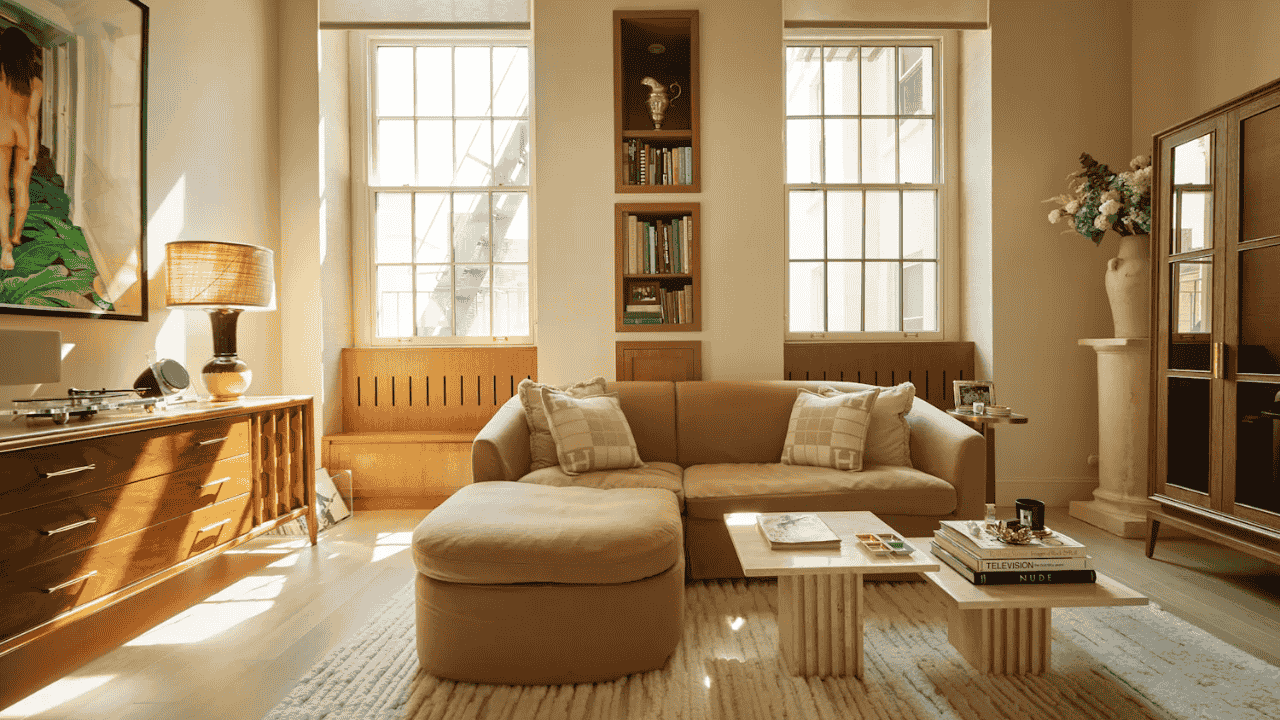
Celebrate period details: The charm of an Edwardian home lies in its details, picture rails, deep skirting boards, bay windows and sometimes original fireplaces. Rather than hiding these, let them lead the scheme.
Edwardian Kitchen Ideas
Kitchen Layout Options
| Option | Benefit |
|---|---|
| Rear extension | Large kitchen-diner opening to the garden |
| Side return extension | Extra width and light |
| Kitchen-diner knock-through | Connects the kitchen with the dining room |
| Separate kitchen and dining | Keeps cooking mess out of sight |
Many owners reconfigure layouts. One Nottingham Edwardian house was reconfigured to suit life today, while also making the most of the beautiful period features.
Kitchen Style Ideas
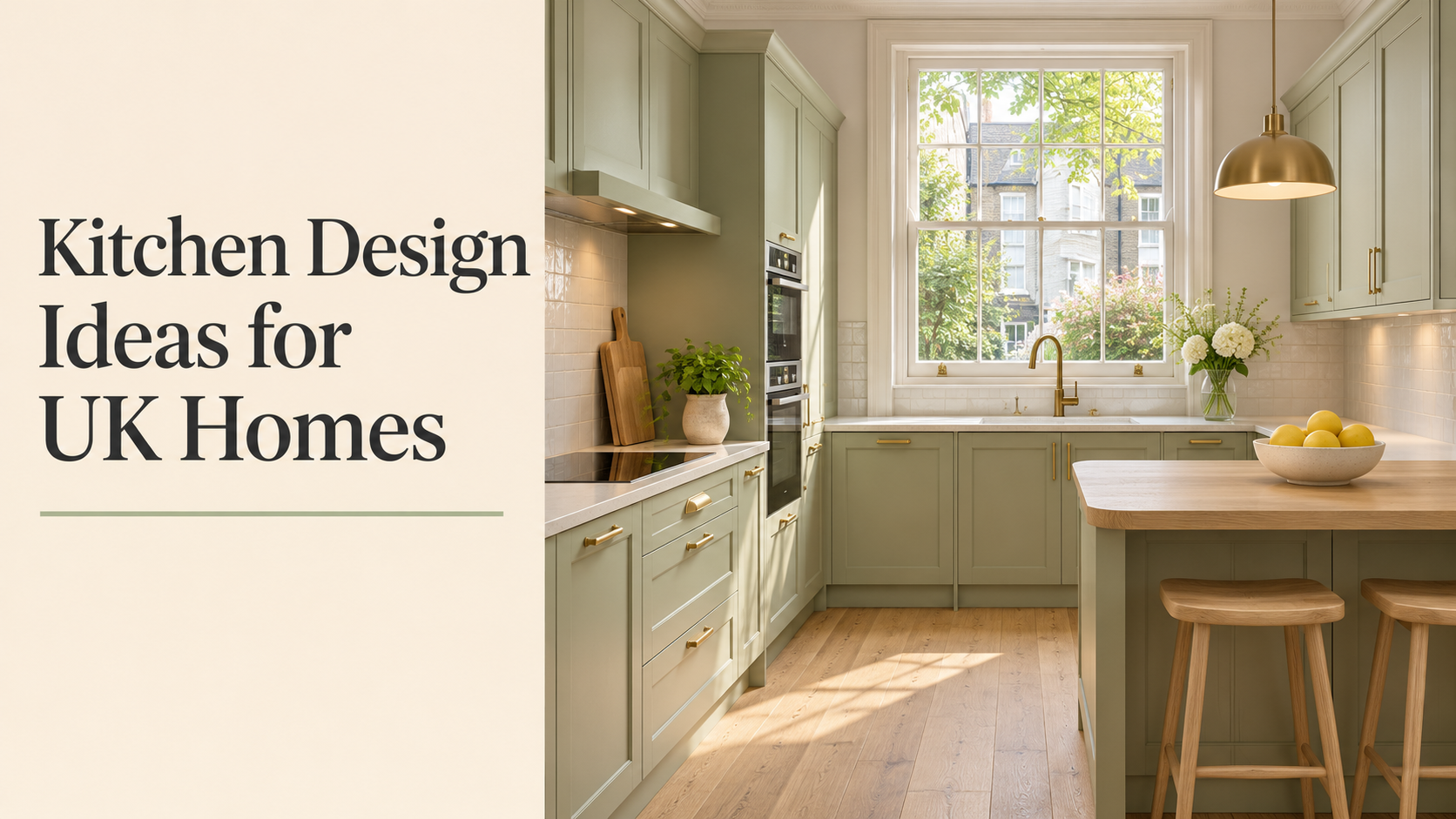
- Shaker or in-frame cabinets in soft greens, blues or creams
- Butler’s sink and bridge taps
- Metro or patterned tiles
- Wooden or stone worktops
- Open shelving with china and ceramics
- French doors to the garden, in keeping with Edwardian love of light
Modern touches can work too. In one Edwardian semi, white laminate flooring makes the space feel larger and adds a Nordic touch to the modern scheme.
Edwardian Dining Room Ideas
- Highlight the fireplace with a contrasting wall colour
- Use a pendant or chandelier with Art Nouveau curves
- Mix antique chairs with a modern table
- Display china on shelves or a dresser
- Use soft lighting and candles
Edwardian Bedroom Ideas
- Pastel walls: soft pink, sage, duck egg or lavender
- Restore the bedroom fireplace as a decorative feature
- Use floral or Art Nouveau-style wallpaper
- Choose an iron, brass or upholstered bed
- Add a wicker or rattan chair
- Hang light, flowing curtains on bay windows
Earthy colours also suit Edwardian bedrooms. In one renovation, the master bedroom features soft, earthy colours.
Edwardian Bathroom Ideas
Classic Edwardian Bathroom Features
- Roll-top or freestanding bath
- Pedestal basin or washstand-style basin
- High-level or traditional close-coupled toilet
- Black-and-white floor tiles
- Metro tiles
- Brass, nickel or chrome traditional taps
Modern interpretations can be stylish. One Edwardian bathroom has a dark blue vanity unit with twin sinks, brass fittings, brass mirrors and pastel green metro tiles in a herringbone pattern.
Stained glass can work in bathrooms too: If you want to make the house look more modern than Edwardian, try a monochrome color scheme for the stained glass. This is a great look, especially in bathrooms.
Flooring Ideas for Edwardian Homes
The Edwardians moved away from carpet. Carpets be gone! The Edwardian era saw a rejection of carpets in favour of lighter and cleaner polished floors, particularly wooden floorboards and elegant ceramic tiles.
| Flooring | Best Rooms | Tips |
|---|---|---|
| Parquet | Living rooms, hallways, dining rooms | Restore, sand and seal |
| Polished floorboards | Bedrooms, living rooms | Fill gaps and oil or varnish |
| Encaustic and geometric tiles | Hallways, porches | Restore or reinstate |
| Terrazzo | Hallways (some homes) | Restore with specialists |
| Ceramic tiles | Kitchens, bathrooms | Choose period patterns |
| Rugs | Throughout | Persian and floral rugs suit the style |
Edwardian advice suggests floors – are parquet and should be stained and varnished. Rugs work beautifully on top: Polished wooden floors and Persian carpets are classic Edwardian features.
Lighting Ideas
The Edwardian era saw electric lighting spread to more homes, bringing new styles. With greater technological advances in lighting, came fashionable accessories – the most famous being the Tiffany lamps from America with their coloured stained glass, inspired by the likes of the Art Nouveau movement.
Lighting Tips
- Tiffany-style and stained-glass lamps
- Art Nouveau pendants with curved metalwork
- Glass shades in soft colours
- Brass or bronze wall lights
- Picture lights hung from picture rails
- Warm, layered lighting with table and floor lamps
Edwardian Furniture Ideas
Typical Edwardian Furniture
Edwardian furniture was lighter than Victorian styles. It favoured simple interior furnishings—not overly ornate.
| Furniture | Style |
|---|---|
| Wicker and rattan chairs | Light, airy, garden-room style |
| Art Nouveau pieces | Curved, flowing lines |
| Mahogany furniture | Inlaid or with delicate detailing |
| Bergère chairs | Cane-backed armchairs |
| Display cabinets | For china and collections |
| Writing desks | Light, elegant designs |
Art Nouveau shaped furniture: The curved shape of the furniture of this period reflects Art Nouveau style.
Rattan remains popular. Many Edwardian furniture designs are still hugely popular today, rattan furniture, for example, takes its cues from the wicker chairs made popular in the early 1900s.
Mixing Edwardian and Modern Furniture
- Pair a modern sofa with an Edwardian bergère chair
- Use rattan chairs in a contemporary kitchen
- Add an antique display cabinet to a modern living room
- Combine Edwardian mahogany with modern lighting
Original features work as a backdrop for modern pieces. Picture rails, fireplaces and bay windows give these homes their character and provide a beautiful backdrop for modern furniture.
Accessories and Decorative Touches
Edwardian homes were cleaner than Victorian ones but still displayed treasured objects. Ornamental displays, such as china plates, gilded picture frames and statement mirrors gave rooms a welcoming charm.
Edwardian Accessory Ideas
- Indoor plants such as ferns, palms and aspidistras
- China plates and decorative ceramics
- Gilded mirrors and frames
- Art Nouveau vases and glass
- Botanical prints
- Embroidered cushions and linens
Plants suit the style well. Indoor plants are also one way to introduce Edwardian style of design to your home.
Modern Edwardian Style: Getting the Balance Right
| Keep | Update |
|---|---|
| Stained glass, porches, bay windows | Kitchens and bathrooms |
| Fireplaces and tiles | Heating and insulation, sensitively |
| Picture rails and skirting | Colour schemes |
| Parquet and floorboards | Lighting |
| Wide hallways | Storage and layout |
Many owners like bright, uplifting colours. One Edwardian homeowner explained: ‘We love colours that are bright and upifting, and that feel fresh to live with.’
Edwardian Style in Modern Homes
You don’t need an Edwardian property to enjoy the style. You don’t have to have a period house or ready-made Edwardian features to achieve this look – in fact, many of the following style elements can be achieved in even a modern-day build!
How to Add Edwardian Character
- Fit picture rails and deep skirting boards
- Use pastel and soft heritage colours
- Add stained-glass panels to doors or windows
- Choose Art Nouveau-style lighting
- Lay parquet or herringbone floors
- Use floral and botanical wallpapers
- Add rattan furniture and indoor plants
- Install a tiled fireplace surround
Budget-Friendly Edwardian Decor Ideas
- Paint in pastels or heritage colours: a quick transformation
- Lift carpets: reveal and restore floorboards or parquet
- Restore fireplace tiles: often only cleaning is needed
- Add picture rails: affordable and easy to fit
- Shop vintage rattan and Edwardian furniture: often good value at auctions and second-hand shops
- Buy reproduction stained-glass film or panels: a budget alternative for small windows
- Add plants and botanical prints: cheap and effective
Relative Costs of Edwardian Updates
| Update | Relative Cost |
|---|---|
| Painting rooms | Low |
| Adding picture rails | Low |
| Restoring floorboards | Low to moderate |
| Cleaning and repairing fireplace tiles | Low to moderate |
| Restoring parquet | Moderate |
| Repairing stained glass | Moderate |
| Restoring porches and fretwork | Moderate |
| Sash window repair and draught-proofing | Moderate |
| Hallway tile restoration | Moderate |
| Built-in alcove joinery | Moderate to high |
| New kitchen | Moderate to high |
| Rear or side extension | Very high |
Practical Considerations
Planning and Permissions
- Check whether your home is in a conservation area or is listed
- Window and door changes may be restricted under Article 4 directions in some areas
- Extensions and structural work may need planning permission and Building Regulations approval
Lead Paint
Old paintwork may contain lead. Be careful when stripping. One period-home owner warns there might be lead in old paint and recommends using peelaway products rather than sanding.
Breathability
Many Edwardian homes have solid walls built with lime mortar. Use breathable paints and plasters where appropriate to avoid trapping damp.
Insurance and Value
- Update home insurance before major renovations
- Update contents cover for antiques and valuable items
- Original features such as stained glass, parquet and fireplaces often add buyer appeal
Common Mistakes to Avoid
| Mistake | Better Approach |
|---|---|
| Removing stained glass | Repair and restore |
| Covering parquet with carpet | Restore and polish |
| Replacing sash windows with uPVC | Repair and draught-proof |
| Painting over fireplace tiles | Clean and restore |
| Using heavy Victorian colours throughout | Keep Edwardian homes light and airy |
| Removing picture rails | Keep and use them |
| Over-cluttering rooms | Keep Edwardian simplicity |
| Sanding old paint carelessly | Test for lead and use safe methods |
Final Thoughts
Edwardian homes combine period character with light, space and comfort. Influenced by Arts and Crafts, Art Nouveau and Georgian revival styles, they are known for wide hallways, decorative porches, stained glass, bay windows, picture rails, tiled fireplaces and polished parquet floors. Edwardian decor favours lighter pastels, soft greens and blues, floral patterns, rattan furniture, indoor plants and graceful Art Nouveau lighting. Modern Edwardian interiors keep these features while updating kitchens, bathrooms, colours and layouts for today’s lifestyles. Whether you own an Edwardian semi or want the style in a newer home, focus on light, simplicity, craftsmanship and the beautiful details that make this era special.
Frequently Asked Questions
What colours suit an Edwardian house?
Soft pastels such as sage, duck egg blue, pale pink and lavender, plus warm neutrals and creams.
How is Edwardian decor different from Victorian decor?
Edwardian decor is lighter, simpler and airier, with pastel colours and Art Nouveau influences instead of dark, busy Victorian schemes.
What flooring suits an Edwardian home?
Parquet, polished floorboards, and encaustic or geometric tiles in hallways all suit Edwardian homes.