British interior design has a personality of its own. It mixes old and new, formal and relaxed, and polished and lived-in. Picture a Victorian terrace with original cornicing and a sleek kitchen, a Georgian townhouse painted in deep heritage green, or a London flat filled with vintage finds, bold wallpaper and well-loved books. Modern British style is less about perfection and more about character, comfort and confident layering.
This guide explains what modern British interior design is, where it comes from, its key features, colour palettes, materials, furniture, patterns, lighting, room-by-room ideas, how to apply it in period homes and new-builds, current trends, typical costs, common mistakes, and how to get the look on any budget, including outside the UK.
Table of Contents
What Is Modern British Interior Design?
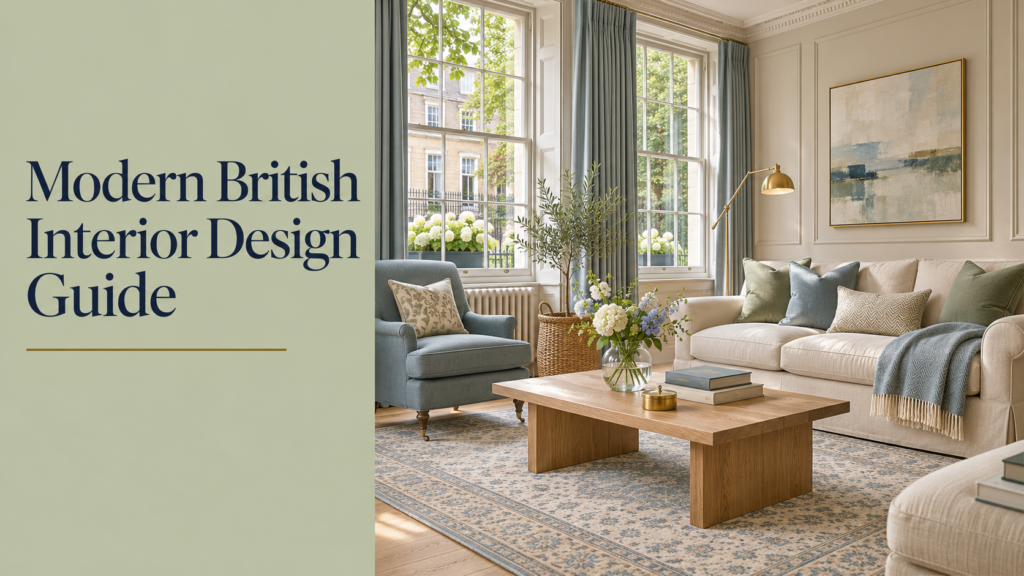
Modern British interior design blends Britain’s architectural heritage with contemporary comfort and practicality. It respects period details, uses rich but sophisticated colours, layers pattern and texture, and mixes antiques with modern pieces.
Its roots lie in two traditions. British interior design covers two overlapping traditions: the English country house, codified by designers like John Fowler and Nancy Lancaster in the mid-20th century, and the Georgian-to-Edwardian London townhouse with its grand proportions and elegant detailing.
A defining quality is warmth and soul. Designer Linda Boronkay says British design brings a ‘soulfulness to a space,’ that ‘speaks to the heart as much as the eye’.
Heritage Meets Modern Living
Many British homes are older properties adapted for modern life. Heritage style describes the balance of period properties with modern-day life. The key is avoiding a museum feel. Sometimes, using antiques and traditional furnishings can give a room a stuffy, old-fashioned atmosphere, so the key to achieving the heritage-style look is to add a modern twist.
A Brief History of British Interiors
| Period | Key Features |
|---|---|
| Tudor (1485–1603) | Dark oak panelling, rich velvet fabrics and wooden four-poster beds |
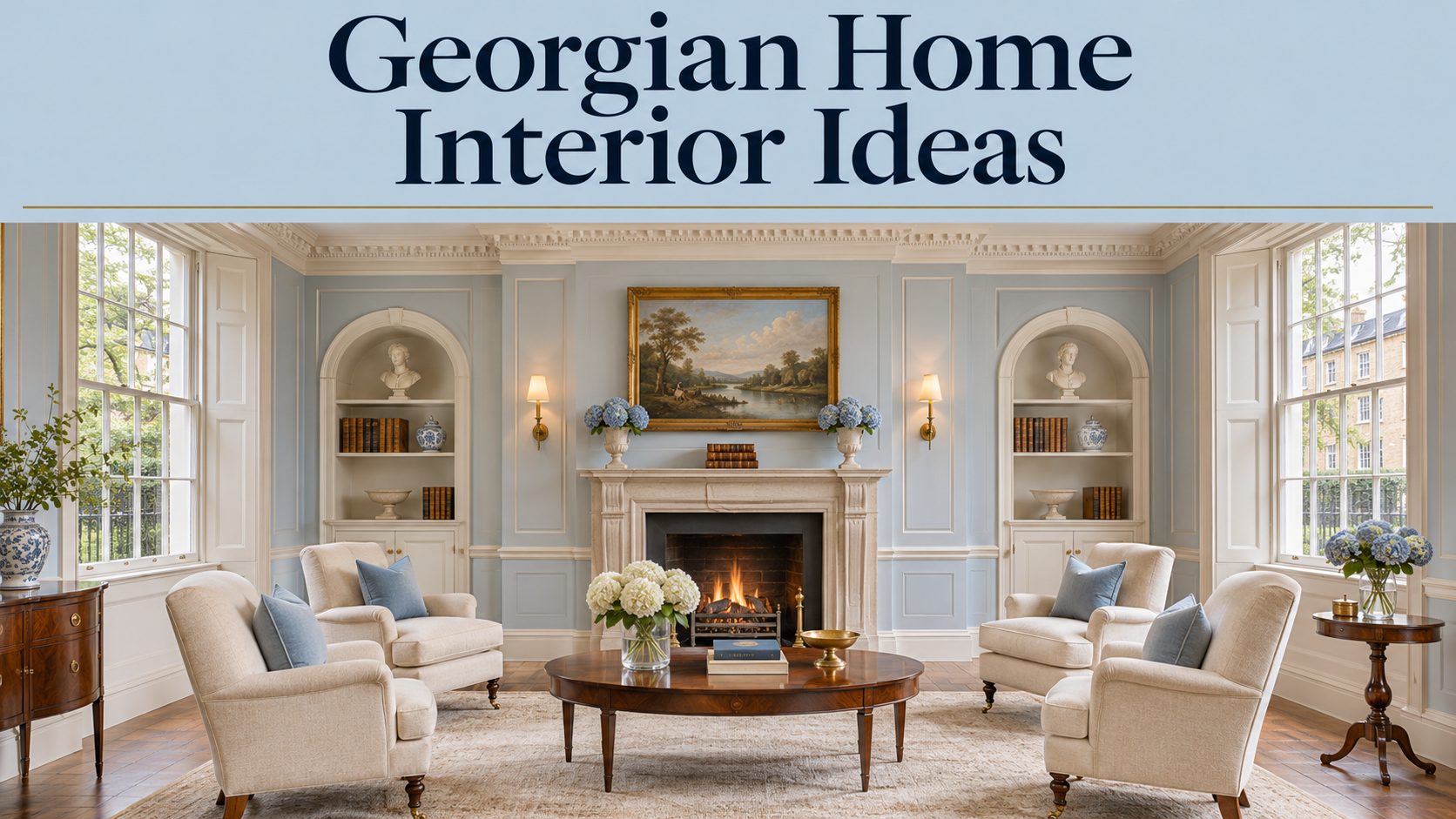
| Georgian (1714–1830) | Symmetry, tall sash windows, classical proportions, pale colours |
| Regency (1811–1820s) | Elegant furniture, stripes, refined decoration |
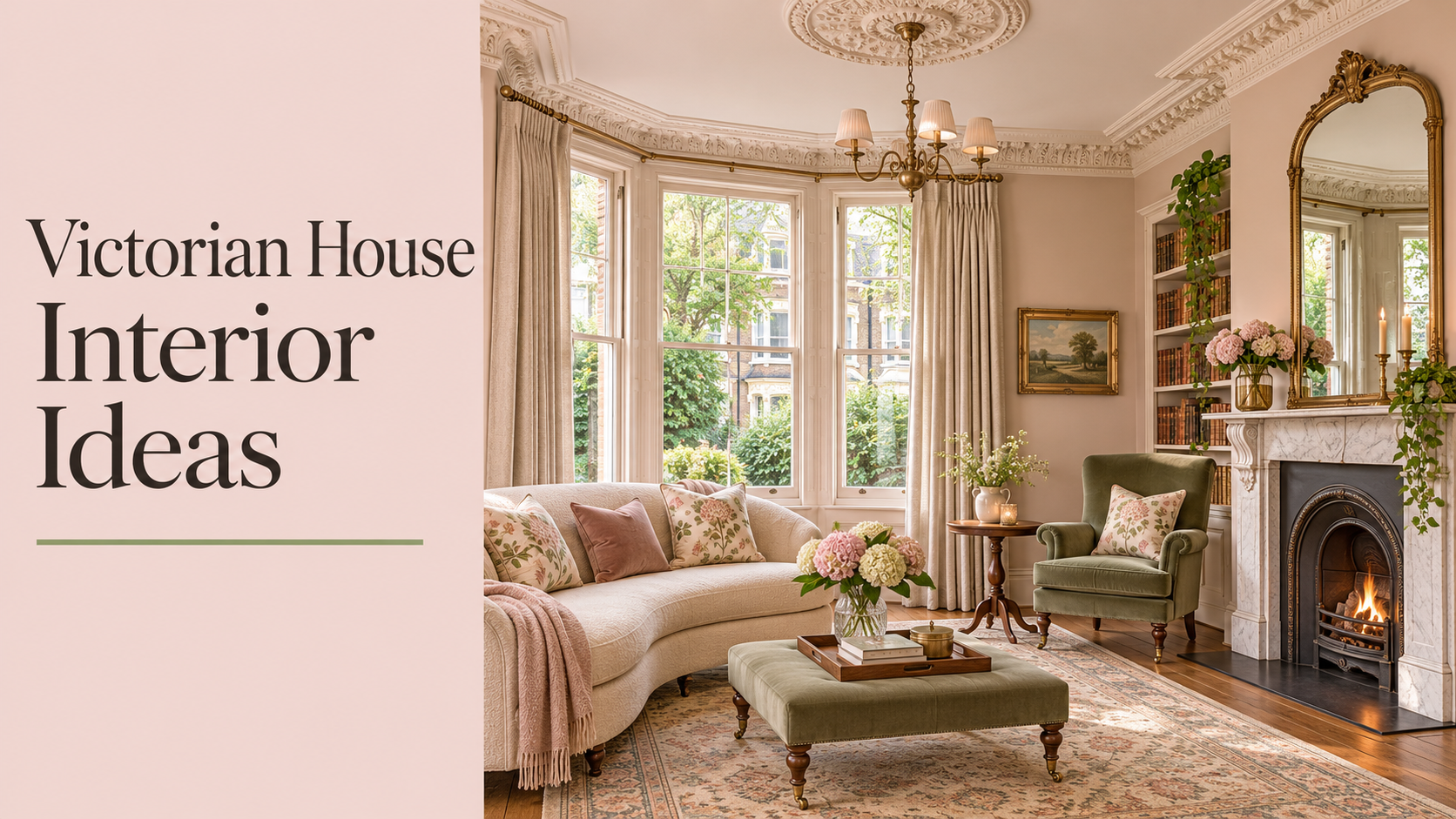
| Victorian (1837–1901) | Rich colours, patterned tiles, ornate fireplaces, busy interiors |
| Arts and Crafts (late 1800s) | Handcraft, William Morris patterns, natural motifs |
| Edwardian (1901–1910) | Lighter colours, airy rooms, decorative plasterwork |
| Mid-century (1950s–60s) | Clean lines, teak furniture, Ercol and G-Plan designs |
| Contemporary (2000s–today) | Open plans, heritage colours, eclectic mixing, sustainability |
Modern British design borrows freely from all of these eras.
Key Features of Modern British Interior Design
1. Respect for Period Features
Original features are treasured: cornicing, ceiling roses, picture rails, panelling, sash windows, fireplaces, encaustic tiles and wooden floorboards. Original features such as these will give an instant injection of heritage style, even if they need a bit of restoration or a coat of paint.
New-build owners can still get the look. Architectural features contribute to the heritage look and can be reinstated or replicated without an interior looking like a pastiche or something from a period drama.
2. Rich, Sophisticated Colour
British interiors are known for heritage paint colours: muted greens, inky blues, warm neutrals and earthy reds.
3. Layered Pattern and Texture
Florals, stripes, checks, tartans and botanical prints are layered with velvet, linen, wool and leather.
4. Mixing Old and New
Antiques, vintage finds and family heirlooms sit beside modern sofas, contemporary lighting and art.
5. Comfort Over Perfection
British style feels lived-in and cosy, never sterile.
6. Quality Craftsmanship
Bespoke joinery, handmade kitchens, upholstered furniture and artisan pieces are valued.
7. Books, Art and Personality
Shelves of books, gallery walls, collected objects and personal stories make rooms feel unique.
Quick Summary of the Look
| Element | Modern British Approach |
|---|---|
| Architecture | Celebrate period details |
| Colour | Heritage shades, often deep and moody |
| Pattern | Florals, stripes, checks, layered thoughtfully |
| Furniture | Mix of antique, vintage and modern |
| Materials | Natural wood, stone, brass, linen, wool |
| Mood | Warm, relaxed, characterful |
| Accessories | Books, art, ceramics, collected objects |
Colour Palette for Modern British Interiors
Heritage Colours
Heritage paint colours sit at the heart of British design. Used well, heritage colours bring depth, warmth, and personality into a room without making it feel heavy. They are also incredibly versatile, which is why we are seeing them in everything from modern new-builds to period homes.
They do not only suit old houses: One of the biggest misconceptions about heritage colours is that they only suit period properties. In reality, they work just as well in modern homes.
Popular Heritage Colour Families
| Colour Family | Example Shades | Best Rooms |
|---|---|---|
| Deep greens | Farrow & Ball Studio Green, Little Greene Obsidian Green, and Dulux Heritage Mallard Green | Living rooms, dining rooms, studies |
| Blues | Farrow & Ball Hague Blue, Little Greene Hicks’ Blue, or Dulux Heritage DH Oxford Blue | Bedrooms, kitchens, hallways |
| Warm neutrals | Farrow & Ball Elephant’s Breath, Skimming Stone, Little Greene Rolling Fog | Living rooms, bedrooms, open-plan spaces |
| Earthy reds | Little Greene Tuscan Red, Farrow & Ball Red Earth, or Dulux Heritage Red Ochre | Kitchens, dining rooms, hallways |
| Soft whites | Off-whites with warm undertones | Ceilings, woodwork, small rooms |
Classic British schemes often feature racing green, deep red, ochre, navy and plum in eggshell finish, paired with white-painted Georgian moldings.
Well-Known British Paint Brands
- Farrow & Ball: the heritage-rich British paint brand renowned for its distinctive colour palette, traditional craftsmanship, and refined approach to interior finishes.
- Little Greene: known for historic colours and National Trust collaborations
- Dulux Heritage: a more affordable heritage range
- Mylands: London-based heritage paint maker
- Edward Bulmer: natural, eco-friendly paints
- Zoffany, Paint & Paper Library and others
Tips for Choosing Colours
Natural light, room size, and ceiling height all influence how colour will appear.
- North-facing rooms: warm-toned colours stop them feeling cold
- South-facing rooms: cooler colours stay fresh in strong light
- Small rooms: try “colour drenching,” painting walls, woodwork and ceiling in one shade for a cocooning effect
- Test large samples on several walls before deciding
- Use eggshell or satin finishes on woodwork and matt or estate emulsion on walls
Materials and Finishes
| Material | Use |
|---|---|
| Oak, walnut and reclaimed timber | Floors, furniture, kitchen worktops |
| Natural stone and marble | Kitchen worktops, bathrooms, fireplaces |
| Brass and aged metals | Taps, handles, light fittings |
| Encaustic and Victorian-style tiles | Hallways, kitchens, bathrooms |
| Linen and wool | Curtains, upholstery, throws |
| Velvet | Sofas, armchairs, cushions |
| Leather | Chesterfield sofas, club chairs |
| Rattan and cane | Accent furniture, lighting |
| Wallpaper | Feature walls, bedrooms, cloakrooms |
Natural materials remain central to current UK design. Kitchen trends highlight natural materials like timber and stone. The tactile appeal of organic materials is central to the 2026 kitchen aesthetic. Wood adds warmth while stone brings durability.
Furniture in Modern British Style
Classic British Pieces
| Piece | Why It Works |
|---|---|
| Chesterfield sofa | Iconic buttoned leather or velvet sofa |
| Wingback armchair | Classic shape, often in a modern fabric |
| Windsor or Ercol chairs | Timeless British craftsmanship |
| Dresser or Welsh dresser | Displays ceramics in kitchens |
| Antique chest of drawers | Adds history and character |
| Roll-top bath | A luxurious bathroom statement |
| Country-style kitchen table | Relaxed family dining |
| Mid-century British furniture | Clean lines from G-Plan, Ercol and others |
Mixing Old and New
- Pair a modern sofa with an antique side table
- Use contemporary lighting above a traditional dining table
- Add a vintage rug under modern furniture
- Reupholster old chairs in fresh fabrics
Designers often follow this approach. One Surrey project’s designer explained: ‘The aim was to balance that traditional British style with a modern aesthetic that felt true to the clients.’
Patterns and Textiles
Classic British Patterns
- Florals: chintz, botanical prints, William Morris designs
- Stripes: ticking stripes, Regency stripes
- Checks and tartans: especially in country and Scottish-inspired schemes
- Paisley: traditional and layered
- Toile: pastoral scenes
- Geometrics: often in tiles and rugs
How to Layer Pattern Without Chaos
- Choose one dominant pattern, such as a wallpaper or large rug
- Add a secondary pattern at a different scale
- Include a small-scale accent pattern (cushions, lampshades)
- Tie patterns together with a shared colour
- Balance pattern with plain textured fabrics
Lighting in British Interiors
British homes often have limited natural light, so layered lighting is essential.
| Layer | Examples |
|---|---|
| Ambient | Pendant lights, chandeliers, ceiling lights |
| Task | Desk lamps, kitchen under-cabinet lights, reading lamps |
| Accent | Picture lights, wall lights, LED strips in shelving |
| Decorative | Pleated lampshades, brass wall sconces, vintage lamps |
Tips:
- Use table and floor lamps in every living space
- Choose warm white bulbs (2700K) for cosiness
- Add dimmer switches
- Use picture lights to highlight art
- Use patterned or pleated lampshades for a British touch
Room-by-Room Modern British Design Ideas
Living Room
- Paint walls in a heritage green, blue or warm neutral
- Highlight the fireplace as a focal point
- Mix a modern sofa with a vintage armchair
- Layer rugs, cushions and throws
- Add built-in bookshelves in alcoves
- Display art in a gallery wall
Kitchen
The British kitchen is the heart of the home.
- Shaker-style cabinets painted in muted colours
- Natural stone or wooden worktops
- Brass or aged-bronze handles and taps
- A Belfast (butler’s) sink
- An Aga or range cooker
- Open shelving or a dresser for ceramics
- A large kitchen table for family life
Dining Room
- Use a deep, moody colour for evening atmosphere
- Hang a statement pendant or chandelier
- Mix chairs or use upholstered dining chairs
- Add panelling or wallpaper
Bedroom
- Soft heritage colours or patterned wallpaper
- An upholstered or wooden headboard
- Layered bedding in linen and wool
- Bedside lamps with fabric shades
- Antique or vintage storage pieces
Bathroom
UK bathrooms are moving away from clinical looks. Bathrooms are becoming more relaxed and less clinical. Materials feel warmer, colours are inspired by nature and layouts are being planned with comfort in mind.
- Freestanding roll-top bath
- Metro, encaustic or hand-glazed tiles
- Panelling painted in heritage colours
- Brass or nickel fittings
- Vintage-style mirrors
- Patterned flooring
Hallway
- Victorian-style patterned floor tiles
- Durable heritage paint colours
- Wall panelling or a dado rail
- Coat hooks, a bench and a statement mirror
- A runner rug on stairs
Home Office or Study
- Deep colours such as green or navy
- Built-in bookshelves
- A leather or wooden desk chair
- A classic desk lamp
Modern British Style in Different Homes
Period Homes (Victorian, Georgian, Edwardian)
- Restore original features first
- Use colours suited to the period
- Keep sash windows and fireplaces where possible
- Add modern kitchens and bathrooms sensitively
Important: if your home is a listed building or in a conservation area, you may need Listed Building Consent or planning permission before changing windows, fireplaces, external features or some internal features. Check with your local council before you start work.
New-Builds and Modern Flats
- Add panelling, picture rails or cornicing
- Use heritage paint colours
- Choose vintage and antique furniture
- Add wallpaper and patterned textiles
- Install traditional-style radiators or fireplaces
- Fit Shaker-style kitchen doors
Small Spaces
- Colour-drench small rooms
- Use mirrors to bounce light
- Choose furniture with legs to feel lighter
- Use built-in storage in alcoves and under stairs
Modern British Interior Trends
Current UK trends support the modern British look:
- Warmth over grey: If there is a single defining movement in UK interior design for 2026, it is the decisive and permanent shift from cool greys to warm, nature-inspired neutrals.
- Modern heritage: One of the most compelling trends for 2026 is the rise of modern heritage interiors, where classic materials meet contemporary design.
- Earthy colours: Designers favour grounded, immersive tones lead the way, including clay, terracotta, forest green and warm browns.
- Character-rich homes: “Interiors with soul” and people “gravitating toward character-rich homes” will top everyone’s wish lists in 2026.
- Lived-in luxury: British homeowners are embracing lived in luxury. These are spaces that feel warm, relaxed, and beautifully imperfect.
- Midimalism: Midimalism combines the simplicity of minimalism with warmth and personal detail, creating calm and more balanced interiors.
- Deep browns: the return of chocolate and coffee tones
- Biophilic design: plants, natural materials and nature-inspired colours
- Sustainability: vintage furniture, reclaimed materials and FSC-certified wood
How Much Does Modern British Interior Design Cost?
Costs vary greatly with property size, location (London is usually more expensive), materials, and whether you hire professionals. The figures below are rough guides only.
Typical UK Cost Ranges
| Item | Budget | Mid-Range | High-End |
|---|---|---|---|
| Heritage paint (per 2.5L) | Dulux Heritage range | Little Greene / Farrow & Ball | Specialist limited editions |
| Wallpaper (per roll) | High street brands | Designer brands | Hand-printed and bespoke |
| Sofa | High street | Made-to-order British upholstery | Bespoke heritage makers |
| Kitchen | Flat-pack Shaker style | Mid-range fitted kitchens | Bespoke handmade kitchens |
| Bathroom | Standard suite | Heritage-style fittings | Luxury roll-top bath and stone |
| Panelling | DIY MDF kits | Professionally fitted | Bespoke joinery |
Interior Designer Fees in the UK
| Fee Structure | How It Works |
|---|---|
| Hourly rate | Charged per hour; rates vary by experience and location |
| Fixed fee | Set price for a defined project |
| Percentage of project cost | Common for full renovations |
| Per room | For smaller projects |
| E-design / online design | Cheaper remote design packages |
Always get a written proposal that sets out the scope, fees, timelines and what is included.
Money-Saving Tips
- Paint is the cheapest way to transform a room
- Buy vintage and antique furniture from auctions, charity shops and online marketplaces
- Reupholster existing furniture instead of buying new
- Use DIY panelling kits
- Spend on key pieces (sofa, kitchen) and save on accessories
- Keep original features rather than replacing them
Home Insurance, Mortgages and Value
Home Insurance
- Update your contents insurance when you buy valuable antiques, art or designer furniture
- High-value single items may need to be listed separately on your policy
- Some insurers offer specialist cover for period and listed homes
- Tell your insurer about major renovations before work starts
Financing Renovations
- Remortgaging or further advances from your mortgage lender
- Personal loans for smaller projects
- Savings or interest-free retail finance for furniture
- Compare total costs, including fees and interest, before borrowing
Adding Value
Sympathetic renovation of period features, quality kitchens and bathrooms, and timeless colour schemes can make homes more attractive to buyers. Overly personal or trend-led changes may not add value.
Common Mistakes to Avoid
| Mistake | Better Approach |
|---|---|
| Ripping out period features | Restore and celebrate them |
| Too many matching furniture sets | Mix eras and styles |
| Cold grey everywhere | Use warm heritage colours |
| Poor lighting | Layer lamps, wall lights and accents |
| Overdoing patterns randomly | Use scale and colour to connect patterns |
| Making it look like a museum | Add modern pieces and comfort |
| Ignoring natural light | Choose colours based on room orientation |
| Skipping planning checks | Check listed building and conservation rules |
Getting the British Look Outside the UK
Modern British style also works in homes in India, the Gulf, the US and elsewhere:
- Choose heritage-inspired paint colours from local or imported ranges
- Use wooden Shaker-style kitchen designs
- Add a Chesterfield-style sofa or wingback chair
- Layer rugs, cushions and floral textiles
- Display books, art and vintage finds
- Add mouldings or panelling to plain walls
- Adapt fabrics to the climate, for example lighter linens and cotton in hot regions
Final Thoughts
Modern British interior design brings together heritage and modern living. It celebrates period features, rich heritage colours, layered patterns, natural materials, quality craftsmanship and a confident mix of antique and contemporary furniture. The look is warm, characterful and lived-in rather than perfect or showroom-like. Current UK trends toward warm neutrals, earthy colours, modern heritage and lived-in luxury fit this style well. Whether you live in a Victorian terrace, a Georgian townhouse, a new-build flat or a home outside the UK, you can create a modern British interior with thoughtful colour choices, layered textures, good lighting and pieces that tell a story.
Frequently Asked Questions
1. What is modern British interior design?
It is a style that blends period features and heritage colours with modern comfort, layered patterns and a mix of old and new furniture.
2. What colours are used in British interiors?
Heritage greens, inky blues, warm neutrals, earthy reds and soft off-whites are the most popular.
3. Can modern British style work in a new-build home?
Yes. Add panelling, heritage paint colours, vintage furniture and layered textiles to create character.